
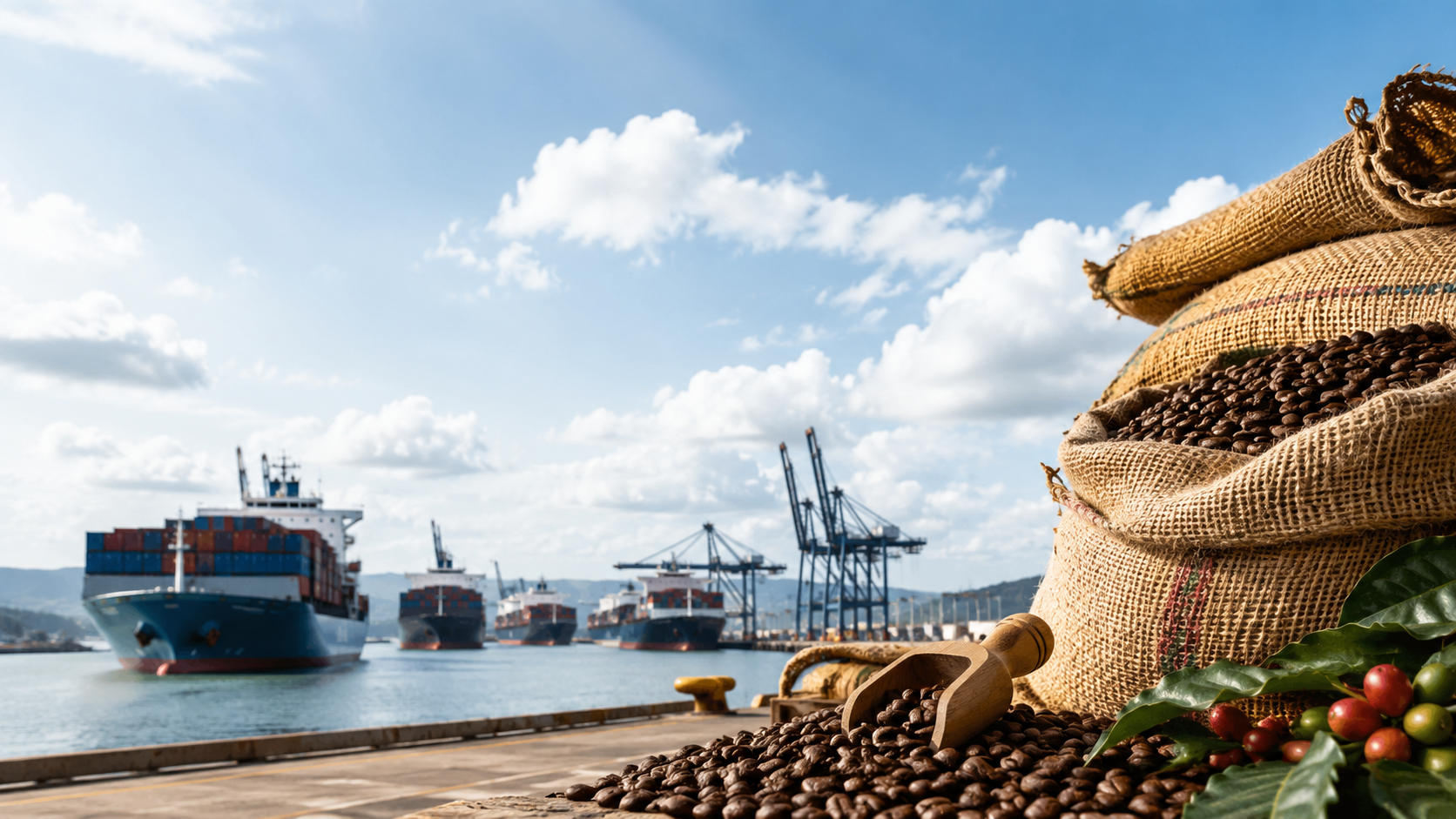
Puerto Antioquia reached two milestones in less than two weeks that confirm the Urabá terminal has moved from a promise under construction to an operational, measurable logistics alternative. On July 4, it received its 100th container ship since starting operations in February, and on July 16 it shipped its first export coffee cargo. For importers and exporters operating out of Antioquia and the coffee-growing region, both announcements reshape the country’s map of port options.
The 100-Ship Milestone: Measurable Efficiency, Not Just Volume
On Saturday, July 4, Maersk’s vessel Polar México became the 100th container ship handled by Puerto Antioquia since commercial operations began in February 2026. That operation registered 401 container moves and the highest net gantry crane productivity achieved by the terminal to date: 31.42 net container moves per hour (NCMPH), one of the standard international indicators for measuring efficiency in container cargo handling.
That figure matters more than the round number of “ship 100.” A crane productivity indicator is what determines, in practice, how long a vessel stays berthed and how predictable cargo transit times are. A new terminal already operating above 30 NCMPH is signaling that its operational learning curve moved fast — something not every port achieves in its first semester of life.

Coffee Exports: A Route That Didn’t Exist Before in Urabá
Eight days later, on July 16, Puerto Antioquia carried out its first export of Colombian coffee, in coordination with Maersk and under LCL (shared container) mode. The operation became possible after Colombia’s tax and customs authority, DIAN, authorized the port as an approved coffee export site through Resolution 7995 of June 4, 2026, following a technical evaluation process conducted by the National Federation of Coffee Growers.
The infrastructure set up for the product is not improvised: Puerto Antioquia has a specialized warehouse with capacity for 18,000 coffee bags (approximately 1,260 tons), distributed across 57 lots that allow individual traceability from receipt through loading, with temperature and humidity monitoring, closed-circuit television, container scanning, and coordination with the Anti-Narcotics Police. The port also has a quality lab operated by Almacafé, offices of the National Federation of Coffee Growers, and services including labeling, bag marking, conversion to Big Bags, and fumigation. With that infrastructure, the terminal is equipped to handle green coffee in 70 kg bags, Big Bags, and bulk cargo, in both FCL and LCL modes.

What This Means for Coffee Growers and Foreign Trade in the Northwest
Until now, export coffee originating in Antioquia and nearby areas of the coffee region moved almost exclusively through the traditional Caribbean and Pacific ports, with the corresponding inland leg to those terminals. Puerto Antioquia’s authorization opens a shorter corridor for coffee growers in the country’s northwest, with the potential to reduce inland transport times and costs to the port of loading.
Two points are worth keeping in mind before switching routes:
- This is a recent operation. The first shipment was made under LCL mode — a shared container with other cargo. Exporters with volumes that justify FCL (full container load) should confirm directly with the shipping line the itineraries and frequencies available from Urabá before committing a shipment.
- Operational efficiency is already verifiable. The 100-ship milestone and the 31.42 NCMPH indicator provide an objective benchmark that the terminal is not in a testing phase, but operating with metrics comparable to established ports.
How Fenix Global Cargo Can Help
At Fenix, we evaluate — shipment by shipment — which corridor makes sense based on cargo origin, volume, product type, and the client’s timeline. With Puerto Antioquia now authorized for coffee exports, that analysis now includes a real additional alternative for cargo leaving from Antioquia and the coffee region, without needing to move cargo all the way to the traditional Caribbean ports. If your operation exports coffee or other cargo from the northwest of the country, we can evaluate with you whether this new route represents a reduction in costs and transit time compared to the scheme you currently use.
- Puerto Antioquia realizó la primera exportación de café colombiano desde el Urabá — El Tiempo
- Puerto Antioquia abre una nueva ruta para exportar el café colombiano al mundo — Diario de Colombia
- Puerto Antioquia alcanza su buque número 100 y bate récord de eficiencia — ABC Economía
- Puerto Antioquia suma 100 portacontenedores atendidos — PortalPortuario

