
A strategic energy corridor under pressure
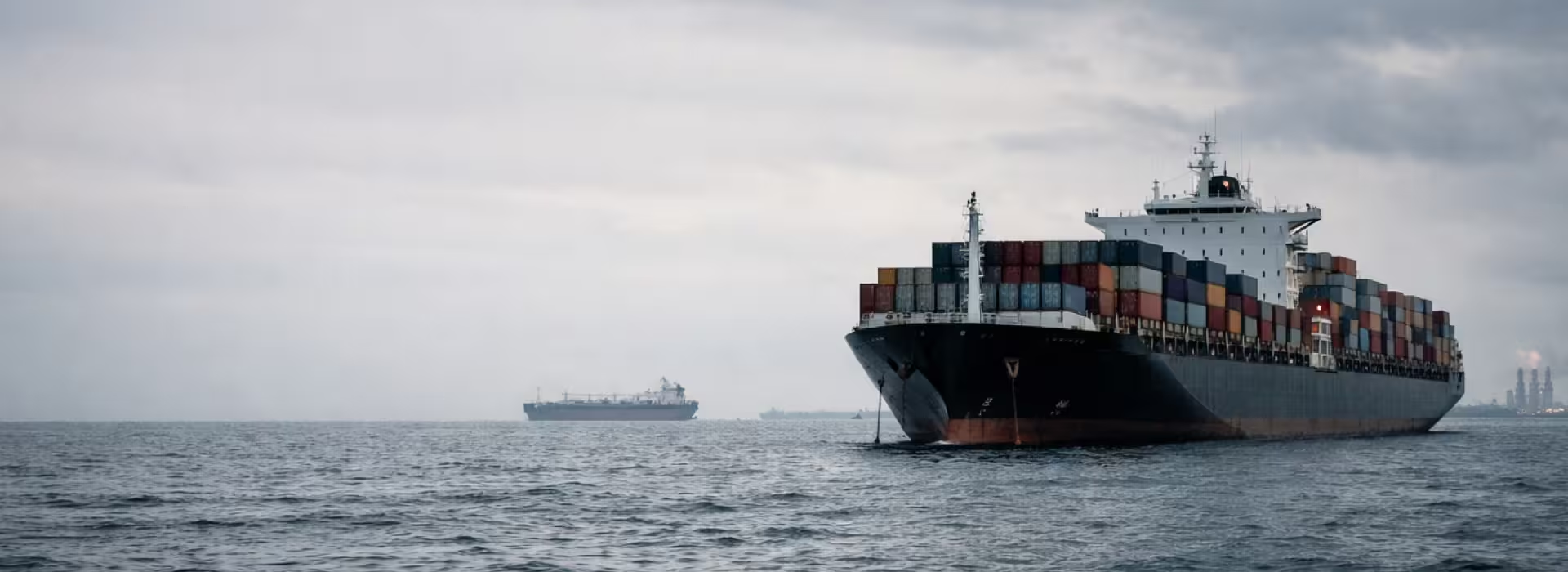
The military escalation involving Iran has turned the Strait of Hormuz into one of the main pressure points for international maritime trade. In the first hours of the conflict, reports confirmed vessels being attacked, tankers damaged, and ships forced to remain stationary, while several of the world’s largest shipping companies temporarily suspended their transits through the area.
The Strait of Hormuz is one of the most strategic maritime passages in the world. Approximately one fifth of globally consumed oil flows through this corridor, in addition to significant volumes of liquefied natural gas. Any disruption in its operation has immediate repercussions on energy markets, maritime transport, and international logistics planning.
Transit suspensions and vessels on hold
Amid rising operational risk, companies such as Maersk, MSC and CMA-CGM announced the suspension of their operations in the area. Other major shipping lines adopted similar measures, prioritizing crew and cargo safety.
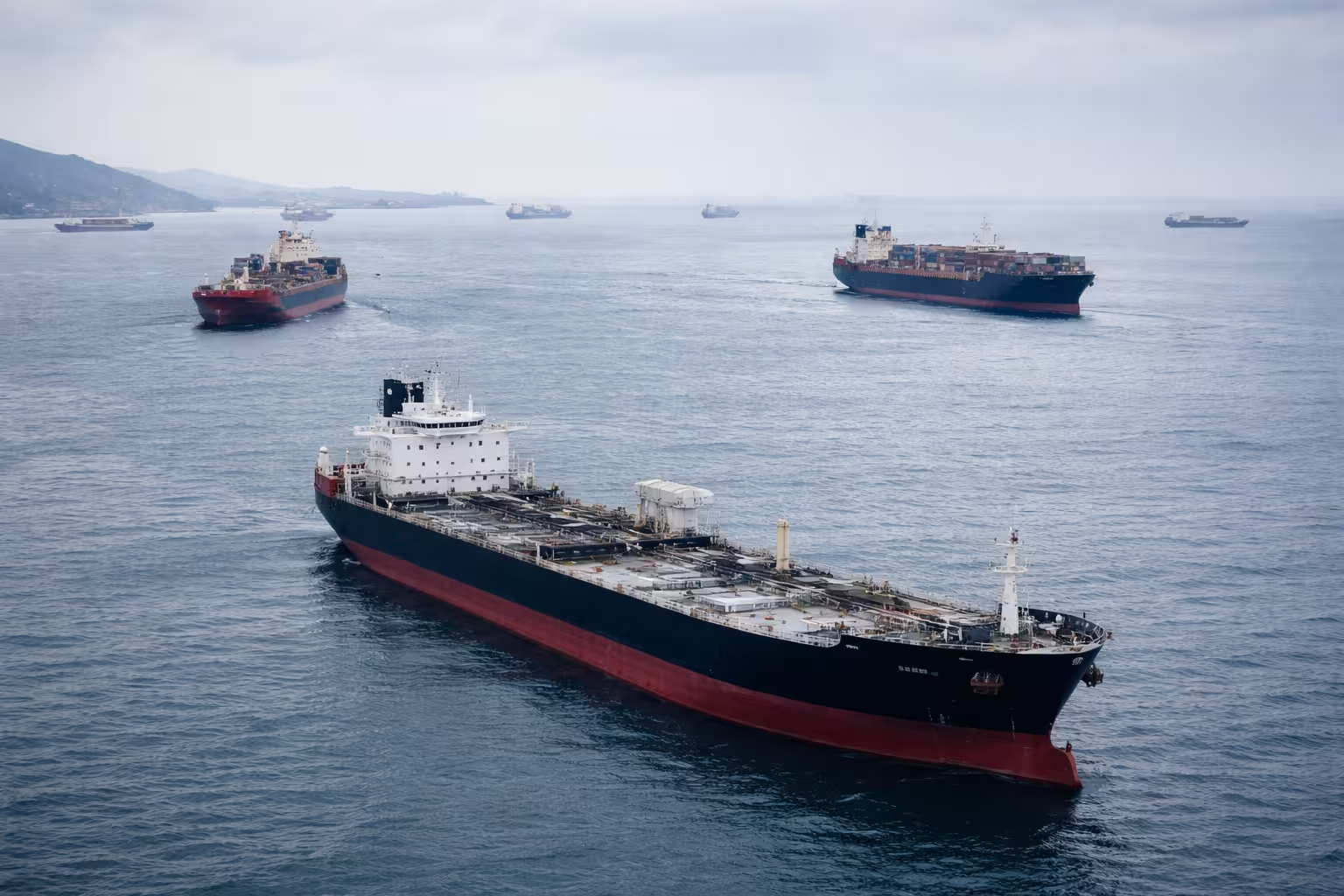
Reports indicate that some tankers were struck and several vessels became stranded or were forced to alter course. This situation caused an immediate reduction in ship traffic through the strait, disrupting previously scheduled itineraries.
From a logistics standpoint, these decisions imply:
- Rescheduled arrivals.
- Possible rerouting to longer alternatives.
- Increased estimated delivery times.
- Adjustments in fleet availability.
Even if temporary, disruptions in such a critical corridor generate cascading effects across multiple trade routes.
Direct impact on transit times
The reduction of maritime flow in Hormuz does not only affect oil tankers. Supply chains depend on strict scheduling, and any alteration at strategic nodes can create congestion in subsequent ports, container redistribution challenges, and accumulated delays.
If traffic remains restricted, some vessels may opt for longer alternative routes. These additional voyages imply higher fuel consumption, extended fleet utilization, and changes in vessel rotation cycles. In international logistics, time is not merely an operational factor; it also determines financial costs, storage planning, inventory management, and contractual compliance.
When the rules change, logistics strategy is your advantage. With Fénix Global Cargo, your operation stays strong.
Oil prices rise and pressure transport costs
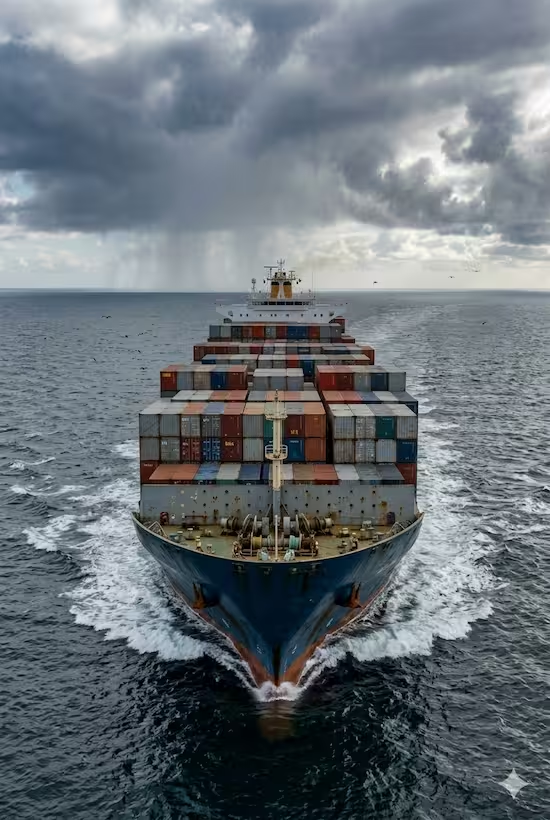
Alongside maritime disruption, energy markets reacted sharply. Following the reported attacks, crude oil benchmarks recorded significant increases. Rising oil prices directly affect maritime transport. Fuel is one of the most relevant cost components within shipping companies’ structures. When crude prices increase abruptly, bunker surcharges tend to adjust accordingly, impacting final freight rates.Additionally, spot freight rates for crude transport from the Gulf to Asia rose considerably, in some cases multiplying compared to pre-conflict levels. This reflects heightened perceived risk and a temporary reduction in the effective supply of vessels willing to operate in the area.
Marine insurance and war risk
Another key element is insurance coverage. Several insurers began restricting or canceling war-risk policies for vessels navigating the Persian Gulf.When such coverage is limited, shipowners face higher insurance costs or, in some cases, choose to avoid the area entirely. This reduces operational capacity and adds further pressure on rates and transit times. In conflict scenarios, insurance ceases to be merely a technical component and becomes a decisive operational factor.
In times of uncertainty, the best choice is to rely on an expert logistics partner
Implications for supply chains
The combination of reduced traffic, rising oil prices, higher insurance costs, and increased risk perception creates a scenario of significant logistics uncertainty.
In the short term, the main observable consequences include:
The evolution of the conflict will determine whether this represents a temporary disruption or a more prolonged scenario with structural effects on global energy routes.
Final considerations
The Strait of Hormuz has historically been a sensitive point for global trade, but recent events show how a military escalation can quickly spill over into the logistical and financial sphere. In a highly interconnected global system, the stability of a maritime corridor not only affects the energy sector, but also has repercussions on transport costs, transit times, and operational predictability on an international scale.
Fénix Global Cargo, safety and control in every logistics operation.
- Iran conflict disrupts global shipping as tankers are stranded, damaged
- The First 36 Hours: Strait of Hormuz Becomes a War Zone, Tankers Hit, Shipping Giants Halt Gulf Transits
- Escalada militar en Irán reduce tránsito de tanqueros en el Estrecho de Ormuz y presiona mercado petrolero
- El precio del gas en Europa se dispara más del 40% al paralizarse la producción en Qatar
- Tensión en el Estrecho de Ormuz: dos buques fueron atacados y las compañías navieras empiezan a suspender sus operaciones

