
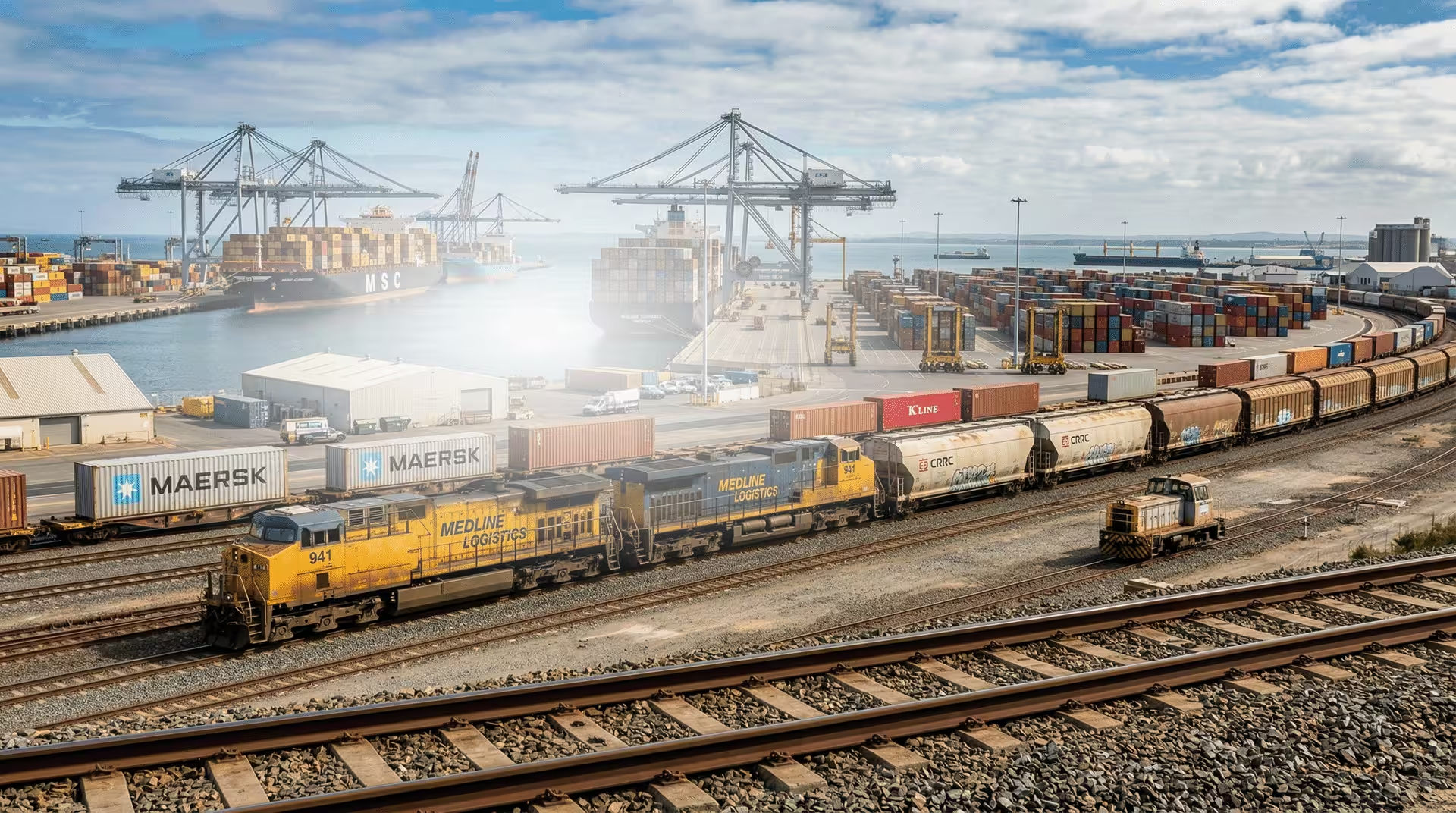
The approval of a new maritime terminal in the municipality of Ciénaga, in Colombia’s Magdalena department, represents a relevant milestone for the country’s logistics infrastructure. The project, which will operate under a 30‑year concession, stands out for integrating maritime, rail, and road transport within a single operational node—an uncommon configuration in the Colombian port system.
While the announcement itself confirms the development of a new terminal, its real significance lies in the logistical implications and in how this infrastructure could reshape cargo flows between the country’s interior and international trade routes.
From an isolated port to an integrated logistics node
Traditionally, many ports operate as standalone transfer points, requiring logistics chains to manage intermodal connections beyond the terminal perimeter. The Ciénaga terminal proposes a different approach: it is conceived from the outset with direct rail connectivity, supported by road transport access.
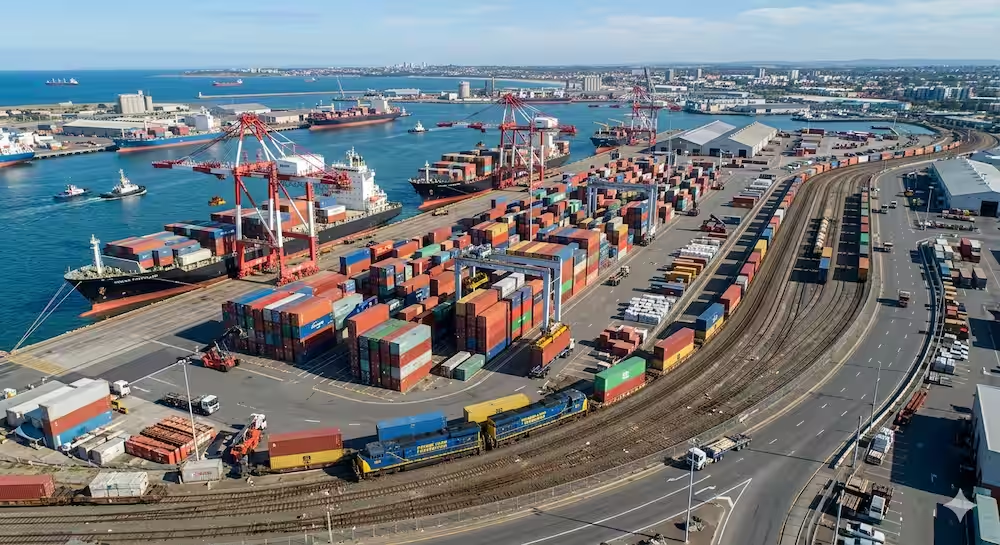
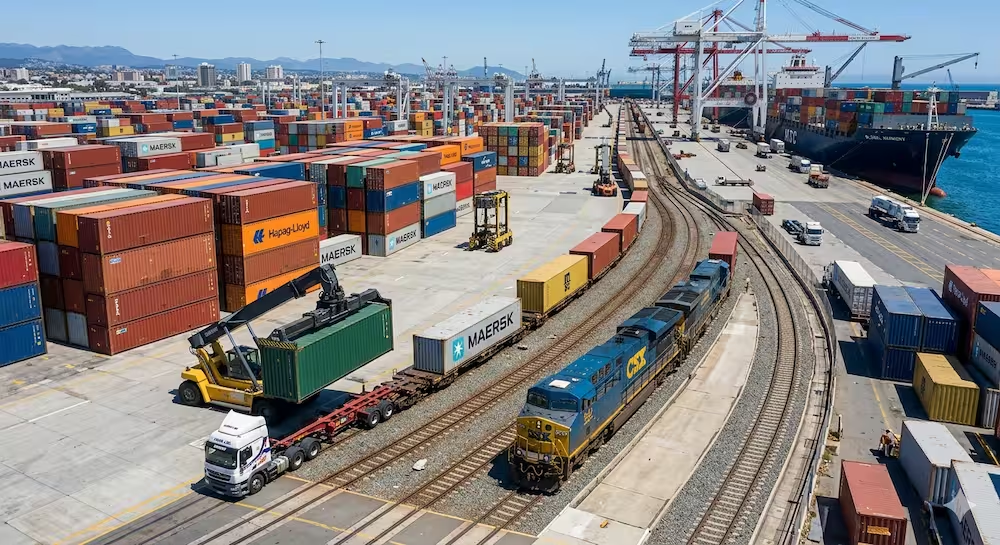
From a logistics standpoint, this design allows the port to function not merely as a loading and unloading point, but as a true flow‑integration node, where cargo can move between transport modes with fewer operational breaks. This structural integration reduces friction points and improves the continuity of logistics operations.
Multimodality as an efficiency enabler
In this case, multimodality is not a conceptual aspiration but a direct result of the terminal’s physical and operational configuration. The port–rail–road connection enables logistics chains that are more efficient, particularly for high‑volume or long‑distance cargo movements.
Operationally, this integration supports three core improvements:
- Shorter transfer times by limiting unnecessary handoffs
- Lower costs associated with intermediate handling and storage
- Greater operational predictability, which is essential for logistics planning
These advantages are not automatic, but the infrastructure creates the conditions for companies to redesign transport strategies around efficiency rather than constraint.
The role of rail transport in logistics cost optimization
Rail connectivity is one of the most transformative elements of the project. In a market traditionally dominated by road freight, a port with direct rail access introduces a valuable alternative for moving large volumes of cargo.
For shippers, rail transport can result in lower cost per ton over long distances, greater stability in transit times, and reduced exposure to road congestion. From a logistics perspective, rail also supports scale efficiencies and more consistent flows, which are particularly relevant for industrial supply chains and export‑oriented cargo.
Infrastructure evolves and logistics must anticipate.
Expanding and balancing port capacity in the Caribbean
The new terminal should also be understood within the broader Caribbean port system. Adding capacity in Ciénaga not only increases overall handling potential but also promotes a better distribution of cargo flows.
From a system‑level logistics view, this contributes to:
- Reduced pressure on high‑demand terminals
- More flexibility in port selection based on cargo type and destination
- Lower operational risk associated with congestion
A more balanced port network improves resilience and offers logistics operators greater optionality.
Strengthening connectivity with inland production zones
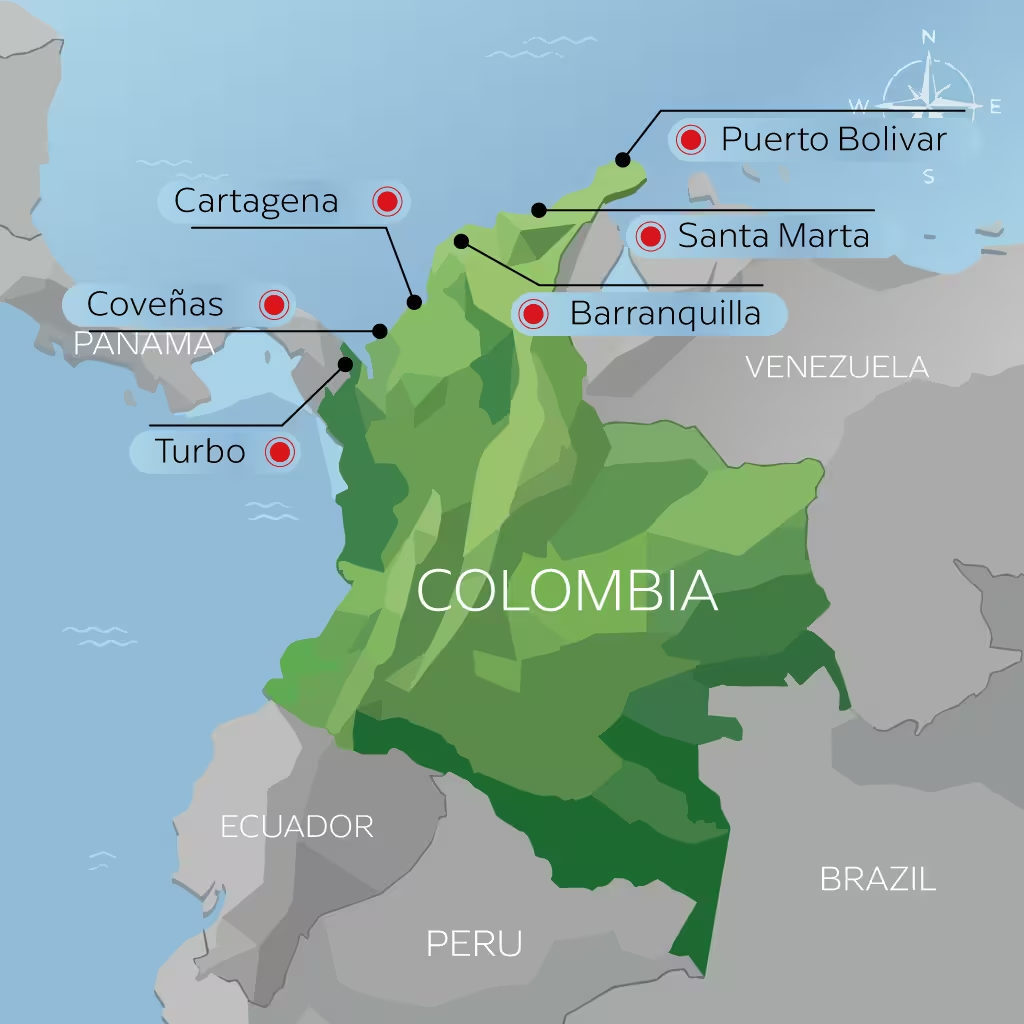
Ciénaga’s strategic location, combined with rail integration, reinforces connectivity between the Caribbean port corridor and inland production regions. This connection is essential for improving both domestic distribution efficiency and export competitiveness.
Logistically, stronger intermodal links allow for optimized routes, reduced effective distances, and more reliable transit times. For exporters and importers, access to a port with multiple transport options can translate into more competitive and adaptable supply chains.
Implications for long‑term logistics planning
The 30‑year concession framework introduces a level of operational stability that is particularly relevant for long‑term logistics planning. This timeframe allows companies to evaluate strategic adjustments to their supply chains with greater confidence.
Potential implications include the reconfiguration of distribution networks, increased use of rail in intermodal strategies, and the redesign of cargo flows toward the Caribbean. Rather than forcing immediate change, the terminal expands the range of viable logistics options over time.
Reopening does not eliminate operational risk immediately. Planning with updated information makes the difference.
A new element in Colombia’s port logistics evolution
The Ciénaga maritime terminal represents more than the addition of physical infrastructure. Its logistics value lies in the integration of transport modes within a single operation, enabling supply chains that are more efficient, predictable, and competitive. As the project develops, its ultimate impact will depend on how logistics stakeholders leverage this infrastructure. What is clear is that it introduces a new organizational logic for cargo transport in Colombia, with implications that extend beyond the port itself and into the national logistics network.

