
The escalation of the conflict between the United States and Iran has generated strong tensions in energy and financial markets. Economists and analysts warn that this situation could lead to a scenario of global stagflation, a combination of weak economic growth, high inflation, and deterioration in employment.
The increase in oil prices and uncertainty in energy markets are directly impacting international trade. For global logistics, these factors can translate into higher operating costs, pressure on exports, and new tensions in the availability of equipment and transportation.
An oil shock putting pressure on logistics costs
Several economic reports indicate that the conflict has caused a significant increase in oil prices, driven by fears of disruptions in energy supply and by volatility generated in international markets. This increase in crude prices has direct consequences for maritime and land transportation. Fuel is one of the main components of logistics costs, so its rise immediately impacts transportation rates.
When oil prices rise, shipping lines and logistics operators face higher operating costs, which are often transferred to global supply chains. This can lead to higher final prices for goods transported internationally and affect the competitiveness of exports.
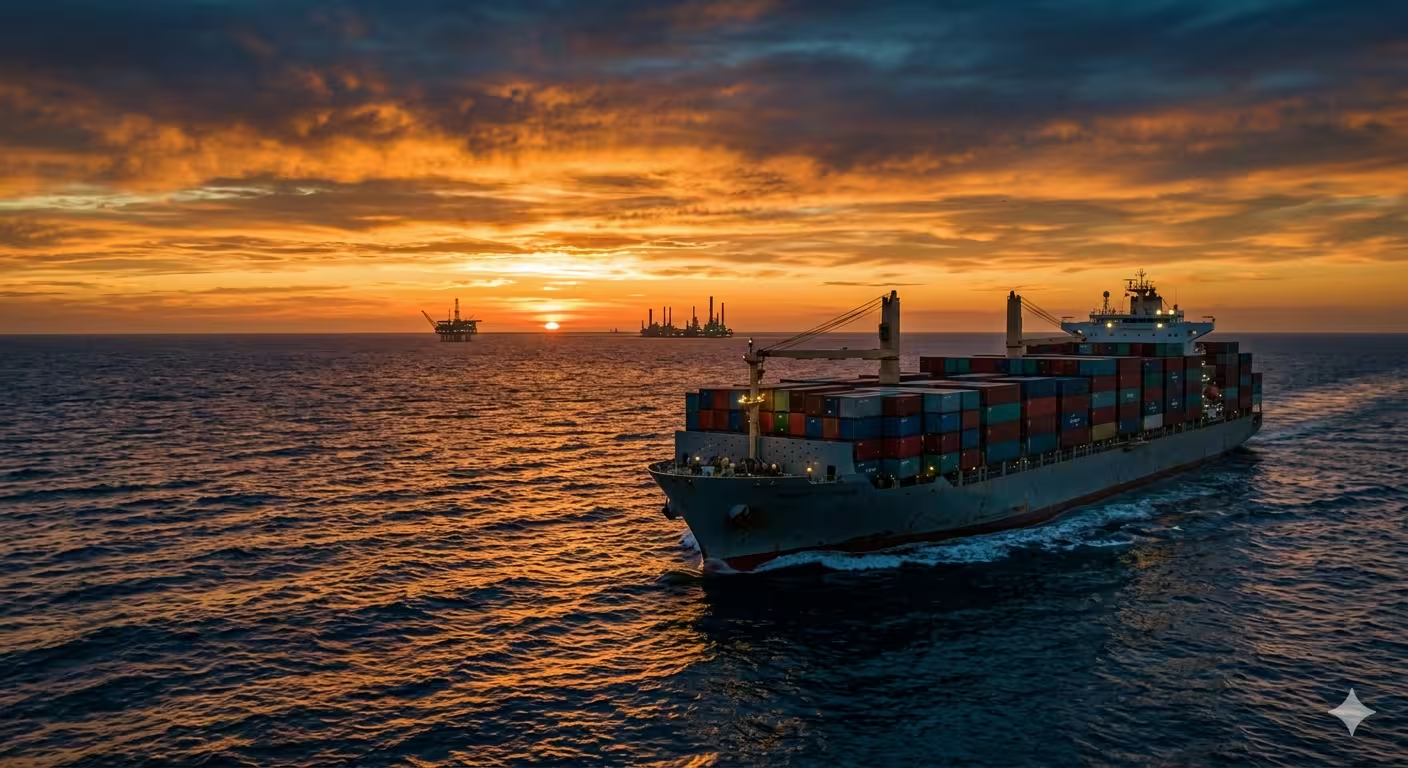
Impact on international trade and exports
Rising energy costs do not only affect transportation. They also impact production costs and the prices of goods traded globally.
In this context, several analyses warn that increasing energy costs may make exports more expensive, especially in sectors that are highly dependent on transportation or energy. This may create additional pressure on international trade at a time already marked by economic uncertainty. At the same time, financial markets have reacted with volatility amid fears that the energy shock may persist and affect global economic growth.
Let’s not allow costs to stop us: let’s optimize your logistics and keep trade moving.
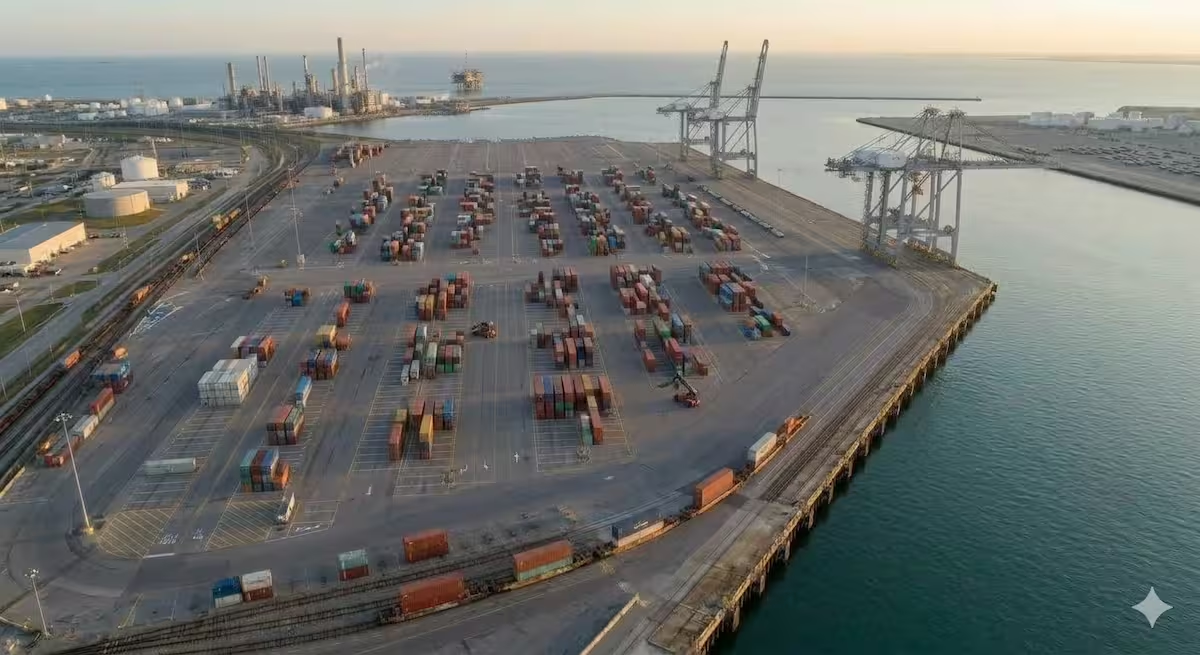
Risk of container shortages in a tense logistics environment
Uncertainty in energy and commercial markets can also affect the availability of logistics equipment. When international trade faces abrupt cost increases and changes in routes or trade flows, the global container balance may be altered. This could result in greater pressure on equipment availability in certain regions and generate delays in supply chains.
This type of logistics imbalance has already been observed in previous global trade crises, when economic volatility changes transportation demand and alters trade flows.
Relief of sanctions on Russian oil and energy reconfiguration
Amid the energy crisis generated by the conflict in the Middle East, some analyses indicate that energy markets are observing changes in the global oil trade. Among them is the easing of restrictions that had limited the commercialization of Russian oil, which could temporarily alter international energy flows.
These movements in the energy market may modify trade routes and energy supply patterns, which in turn influence logistics costs and the dynamics of global trade.
Anticipate scarcity: optimize your exports with our logistical support.
Señales de alerta en la economía Warning signals in the global economy
The fear of a stagflation scenario has been highlighted by economists and analysts who observe the combination of three simultaneous factors:
- rising energy prices
- inflationary pressures
- slowing economic growth
Some experts warn that this scenario could affect both developed and emerging economies, with consequences for investment, employment, and international trade.
For global logistics chains, this combination of factors creates an environment of greater uncertainty, where operating costs and transport times may become more unpredictable.
Logistics scenario: possible effects on global trade
The following section contains speculative analysis based on the information from the cited news reports. These scenarios do not constitute confirmed facts and should not be interpreted as definitive predictions.
If energy tensions persist, international logistics chains could face several simultaneous challenges. Sustained increases in oil prices could continue raising maritime, land, and air transport costs, which would directly impact the cost of moving goods between continents. Likewise, changes in global energy flows could modify trade routes and generate adjustments in logistics planning for importers and exporters.
In a prolonged scenario of energy volatility, companies that depend on international trade could face higher logistics costs, greater uncertainty in transit times, and pressure on export margins.
Logistics and resilience in a context of global uncertainty
The current context reflects how geopolitical conflicts can quickly move into international trade through energy markets.
Rising oil prices, pressure on exports, and the possible imbalance in container availability are some of the factors that are beginning to generate concern in global logistics. In an environment of high economic volatility, logistics adaptability becomes key to maintaining supply chain continuity and reducing the impact of energy shocks on international trade.
Your global trade deserves resilience: with our logistics, uncertainty turns into security.
- Economistas advierten riesgo de estanflación global ante escalada del conflicto en el Golfo Pérsico
- Why has the Iran war sparked fears of stagflation for the global economy?
- Tras el dato de inflación, la guerra en Medio Oriente golpea la economía de Estados Unidos: subida de precios, crisis energética y aumento del desempleo
- El riesgo de estanflación en Estados Unidos es “bastante elevado”: Stiglitz, Nobel de Economía
- Temor de estanflación: así golpea el shock del petróleo a las bolsas del mundo