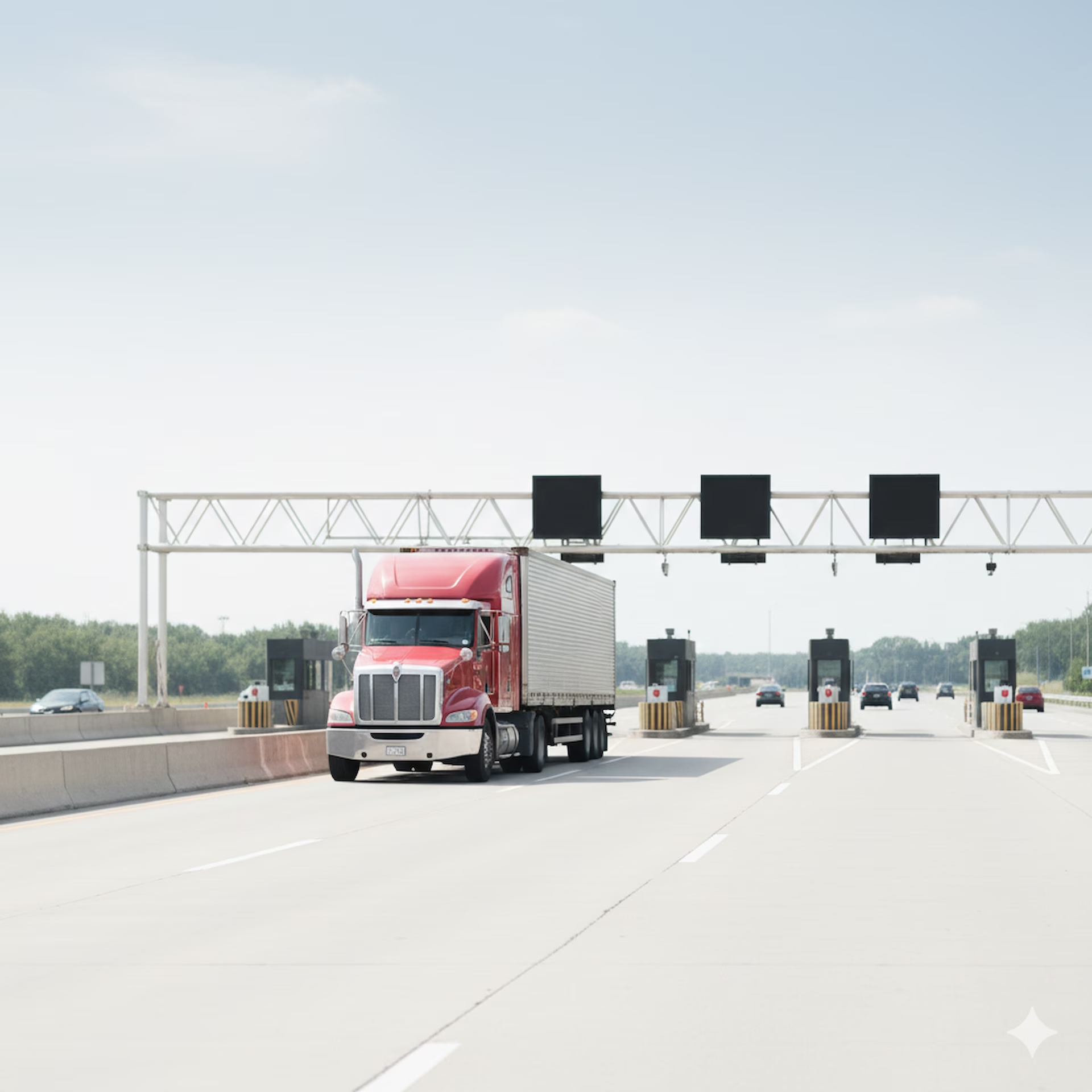
The beginning of 2026 brought a new adjustment to fuel prices in Colombia, a measure with direct effects on logistics operations and road freight transport. According to official information and economic reports, the increase in gasoline and diesel prices adds to other operating costs such as tolls, significantly raising the cost structure of the sector.
Logistics costs pressured by fuel and toll increases
Recent data show that the combined increases in fuel and tolls have generated an increase of close to 10% in road freight transport costs. This behavior is reflected in indicators that measure variations in vehicle operating expenses, where fuel continues to be one of the most significant cost components.
For transport companies and logistics operators, this increase is not marginal. On medium- and long-distance routes, diesel consumption represents a substantial portion of the total cost per trip, amplifying the impact of any adjustment in fuel prices.

New gasoline and diesel prices as of January 2026
As of January 1, 2026, new regulated prices for regular gasoline and diesel came into effect, as defined by the Energy and Gas Regulation Commission (CREG). At the national level, the adjustment translated into average increases of approximately 90 pesos per gallon for gasoline and around 99 pesos per gallon for diesel. As a result, the average price of regular gasoline stands at approximately 16,057 pesos per gallon, while diesel reaches around 10,984 pesos per gallon. These values are not uniform across the country, as they vary by city due to transportation, distribution, and regional logistics costs.

Comparison with 2025 price levels
When comparing these prices with those recorded at the end of 2025, a clear upward trend is evident. During the previous year, gasoline prices remained below the 16,000-peso-per-gallon threshold, while diesel hovered around 10,785 pesos. Although the variation may seem moderate in absolute terms, its cumulative effect on daily transport operations is considerable.
For fleets operating multiple weekly routes, even increases of this magnitude translate into higher monthly expenditures, affecting operational profitability and requiring revisions to budgets and financial projections.
Implications for freight transport
Higher fuel prices have a direct impact on fixed and variable costs in road freight transport. Key implications include pressure on carrier margins, the need to adjust freight rates, and reduced operational flexibility—particularly on logistics corridors with a high concentration of tolls. In addition, regional differences in fuel prices create uneven conditions for companies depending on their location and the routes they operate. Cities with higher distribution costs tend to register higher fuel prices, which affects the competitiveness of certain routes compared to others.
An adjustment scenario for logistics in 2026
The 2026 context presents an operational challenge for Colombia’s logistics sector. Rising fuel prices, combined with the effect of tolls, force companies to place greater emphasis on route efficiency, cost control, and operational planning.
In this environment, logistics management becomes a key factor in mitigating the impact of these increases and maintaining operational continuity amid a landscape of rising costs.
Sources
La República: Nuevos precios de la gasolina y el ACPM desde enero de 2026
El Colombiano: Suben los precios de gasolina y ACPM en Colombia
DataiFX: Alza de combustibles y peajes elevó costos del transporte de carga en casi 10%