For a long time, the plastic tax was perceived as an obligation unrelated to most importers. It was almost exclusively associated with packaging manufacturers, the petrochemical industry, or national producers. Today, that perception is no longer valid and may create real risks for foreign trade operations.
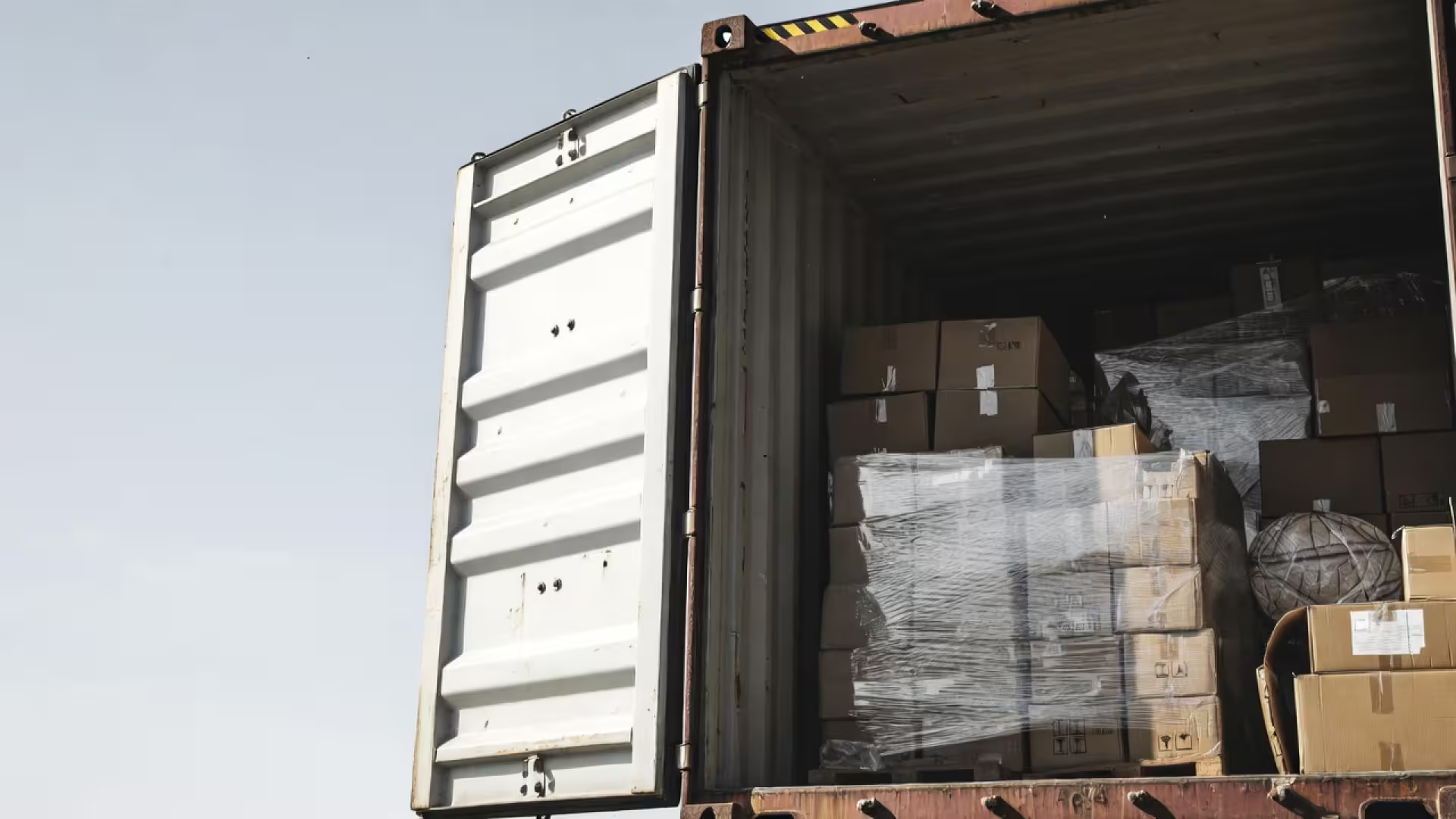
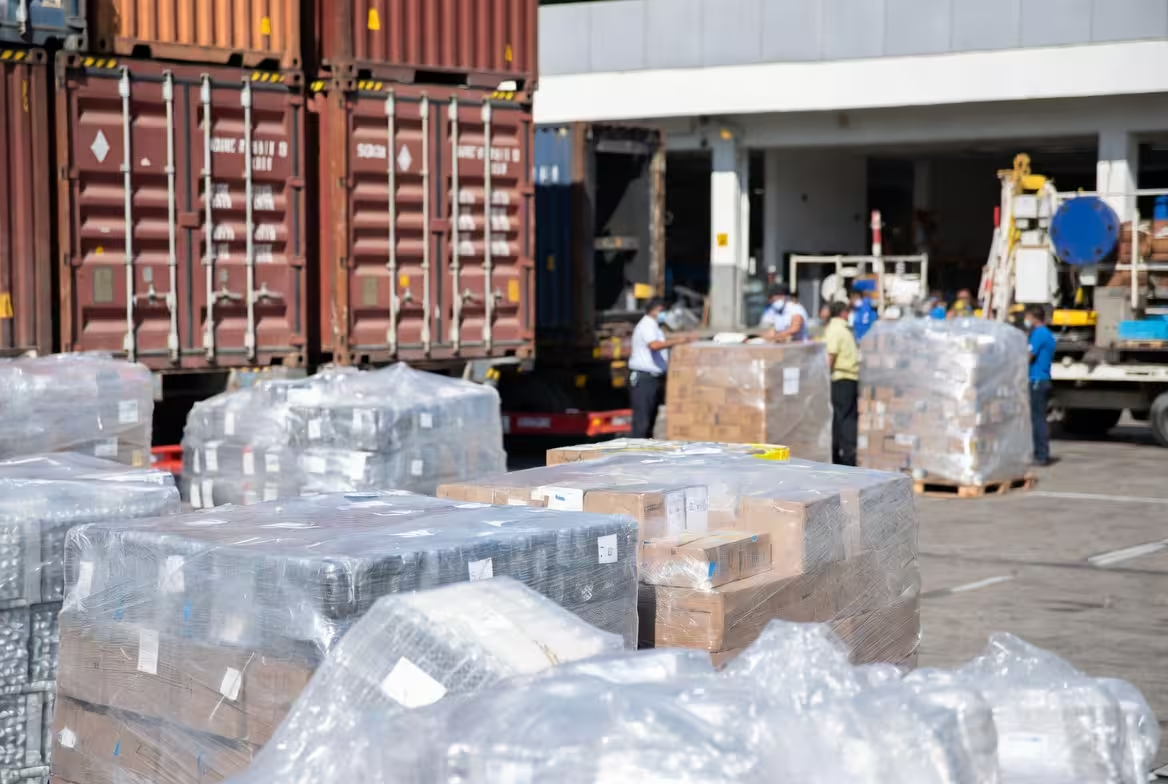
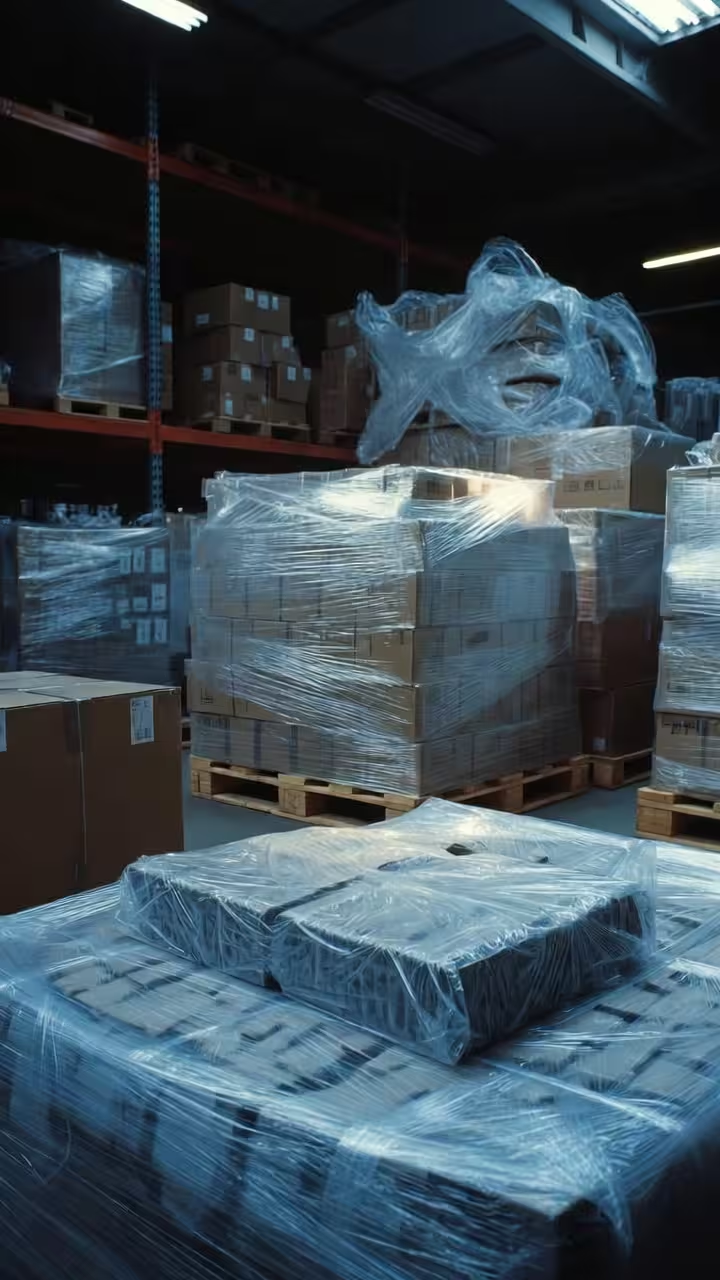
Currently, importing goods into Colombia that contain single-use plastic packaging, wrapping, or packing materials may generate a tax obligation, even when the plastic serves only a logistical protection function. The analysis no longer focuses on whether plastic is the product, but on whether it accompanies the product when entering the country.
This affects very common operations such as:
In all these cases, plastic accompanies the goods and, as a general rule, that component is taxable.
What IPUSUI is and why it now applies to importers
The National Tax on Single-Use Plastic Products (IPUSUI) was created by Law 2277 of 2022. In its initial design, the tax had a limited scope in the context of imports and was mainly associated with self-consumption scenarios. This approach changed substantially with Constitutional Court Ruling C-099 of 2025, which eliminated the restriction based on the destination of the goods. From that decision onward, the tax stopped depending on why goods are imported and started depending on how they are packaged.
Since then, any finished goods entering the country with single-use plastic may be subject to the tax, except for expressly stated exclusions.
Resolution 000005 of 2026 and the enforceable procedure
On February 9, 2026, the Colombian tax authority issued Resolution 000005, establishing the procedure to declare, assess, and pay the plastic tax on imports.
With this resolution, the obligation moved from theory to practice. The issue is no longer whether the tax exists, but how to comply correctly, especially in an environment where many operations were not prepared to capture this information.
One of the most relevant aspects of the resolution is the distinction between payment and data reporting, which requires careful interpretation to avoid mistakes.
The key dates are:
- The data report (Form 3300) is due by March 31.
- The tax return and payment (Form 330) have no extension and are due Friday, February 13.
This means the tax must be paid even while detailed information continues to be adjusted afterward.
Avoid sanctions and complications: talk to our experts today.
Documentary flexibility and importer responsibility
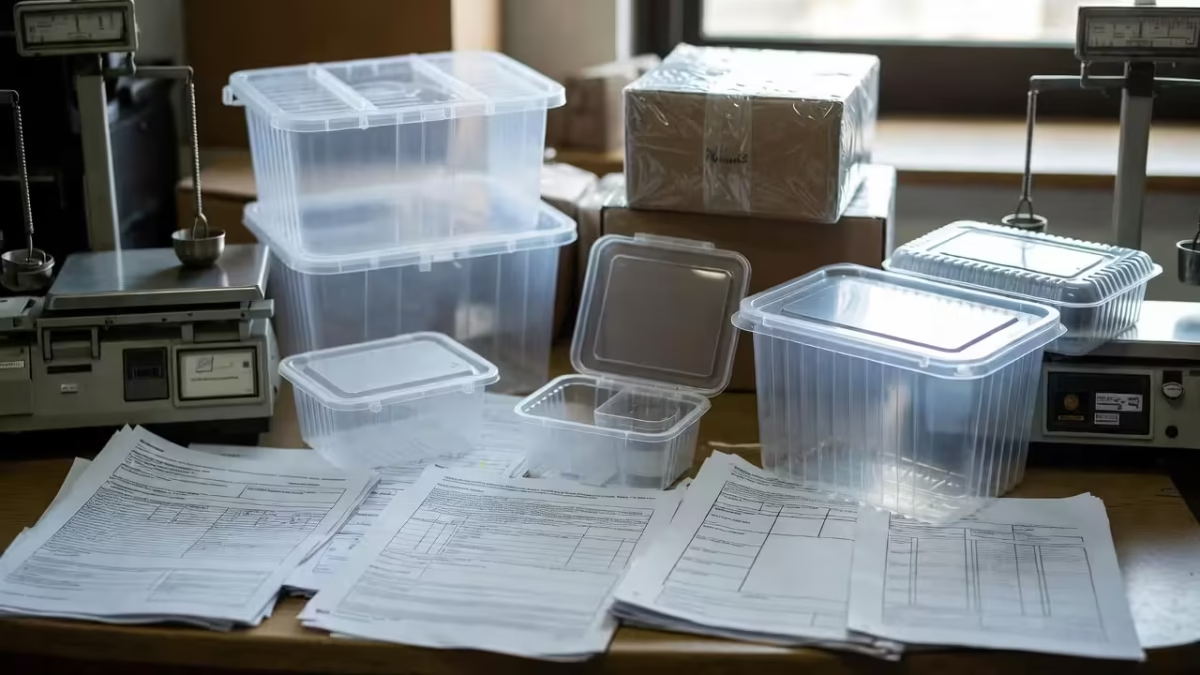
The resolution introduced significant documentary flexibility. Certification from the foreign supplier or carrier is required only when available.When it is not possible to obtain such certification, importers may rely on internal estimates, provided they are made under oath. This acknowledges an operational reality of international trade, where many suppliers are neither required nor able to certify exact plastic weights.
However, this flexibility does not eliminate risk. Estimates must be technically reasonable, consistent, and supportable, as they may later be reviewed by the tax authority.Here, logistics plays a central role. Weighing, sampling, and packaging standardization move from secondary tasks to core elements of tax control.
The false assumption of total exemption and the layer approach
One of the most frequent mistakes among importers is assuming that the plastic tax works on an all-or-nothing basis. In practice, many believe that if a product is excluded, all associated plastic is excluded as well. Recent tax doctrine points to a different approach, which can be understood as exclusion by layers. Generally, the exclusion applies only to primary packaging, meaning the layer in direct contact with the product.
Secondary and tertiary layers used for grouping, protection, or transport may be taxable, even when the main product is excluded.
This forces importers to analyze:
Penalties for Failure to File the Single-Use Plastic Tax Return
Failure to file the tax return for the National Tax on Single-Use Plastic Products within the established deadlines may result in a significant penalty.
Under current Colombian tax regulations, when a return is not filed, the tax authority may impose a penalty equal to 20% of the tax that should have been paid, in addition to applicable interest.
This differs from cases where a return is filed with errors. When submitted on time but containing inaccuracies, the taxpayer may file a correction, adjust the amount, and pay the difference, thereby avoiding the maximum omission penalty.
In practical terms:
Not filing triggers a 20% penalty on the tax due.
Filing and correcting is legally manageable.
You don’t have to face this complexity alone. Write to us and we will guide you step by step.
The challenge of weighing and reviewing past operations
The tax base is the weight of plastic in grams, which represents a significant operational challenge. Determining that weight in large-scale operations is not always straightforward, particularly for imports carried out before a clear procedure existed.Between July and December 2025, many importers cleared goods without discriminating plastic weight, acting in good faith under the regulations in force at the time. Today, those operations must be reviewed and, in some cases, reconstructed.
This process involves reviewing historical documentation, technical sheets, sampling, and building reasonable estimates. It is not immediate, but it is necessary to reduce future risks.In this context, logistics becomes a critical source of tax information, not just a transport process.
Preparing without panic, but with method
Although regulation arrived late and brings evident challenges, the obligation exists and the tax calendar does not stop. Proactive preparation is the best tool available to importers today. Having technical information, understanding how goods are packaged, and properly documenting estimates allows a complex obligation to become a manageable process.
Anticipate the challenges: contact us and turn the obligation into a controlled process.