
The conflict between the U.S. and Iran drives crude prices higher
The escalation of the conflict between the United States and Iran triggered an immediate reaction in international energy markets. Geopolitical tensions increased concerns about potential disruptions to global oil supply, pushing crude prices significantly higher.
In this context, the main oil benchmarks recorded a notable increase. Brent crude, the international market reference, rose by more than four dollars per barrel, representing an increase of nearly 6%, while West Texas Intermediate (WTI) also registered a significant rise. The movement reflects how energy markets respond quickly to scenarios that could affect oil production or transportation, particularly when they involve regions that are critical for global supply.
Maritime transport under pressure
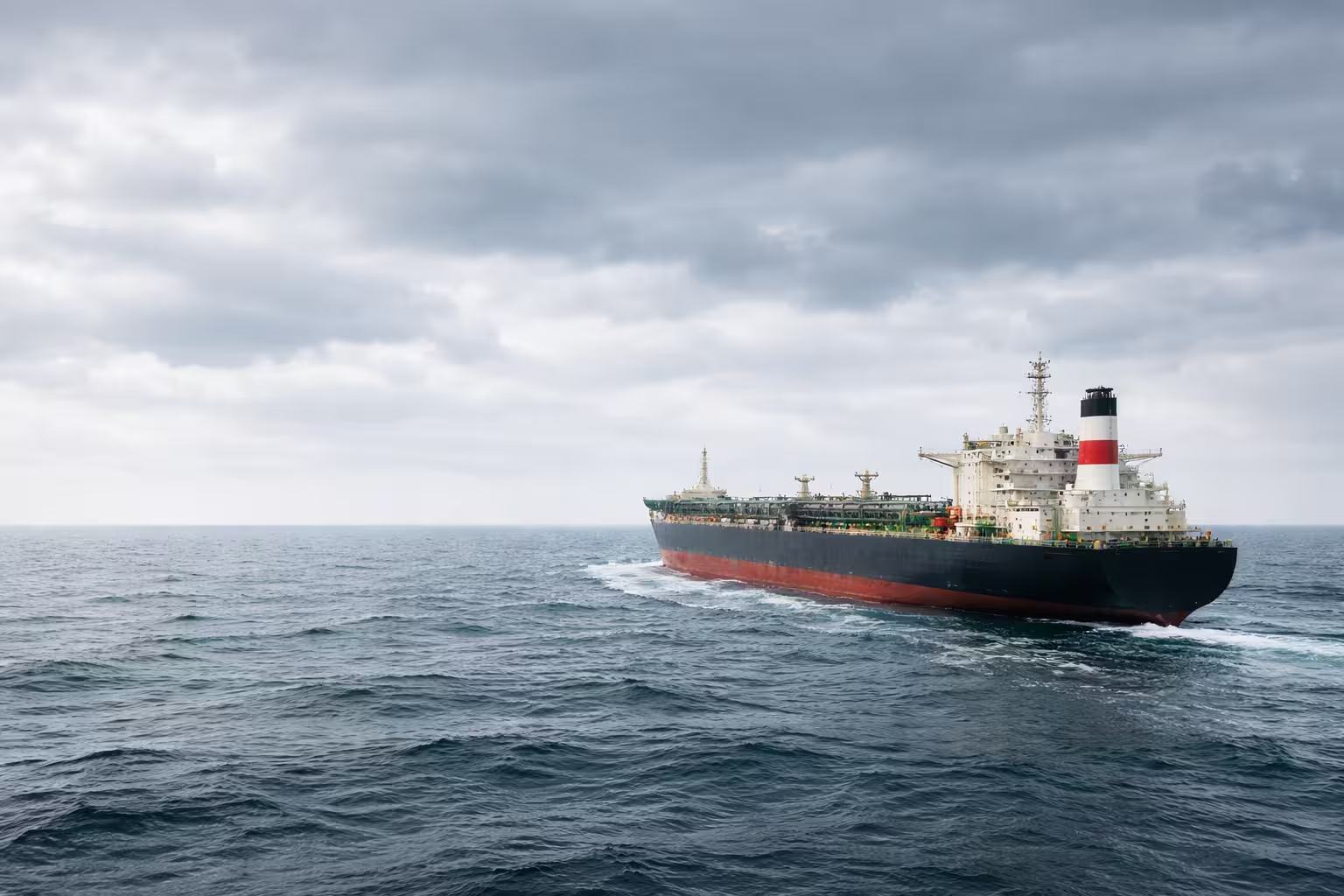
One of the main concerns in the energy market is related to maritime oil transport. Military tensions increase the level of risk for vessels operating along strategic routes used for crude exports. In these scenarios, maritime trade may face higher operational costs, logistical delays, or additional security measures to ensure safe navigation.
These conditions create uncertainty regarding the continuity of global energy flows. When doubts emerge about the stability of maritime routes, markets often react with higher oil prices due to fears of possible disruptions in the supply chain.
Trust your maritime transport to an operator that guarantees safety and continuity
Oil volatility in times of geopolitical conflict
The recent behavior of the oil market follows a historical pattern. Conflicts in energy-producing regions tend to trigger sharp price movements due to uncertainty about supply. According to energy market analyses, oil prices usually experience rapid increases during active phases of conflict, particularly when there is a risk of disruptions in production or export routes. In the case of the current confrontation between the United States and Iran, investors are closely monitoring any signal that may indicate changes in oil flows from the Middle East, a region that plays a decisive role in the global energy balance.

The impact of oil prices on logistics cost structures
Rising crude oil prices have direct implications for international trade and the functioning of logistics chains. Fuel represents one of the main operational costs in global transportation. For this reason, fluctuations in oil prices tend to gradually translate into higher costs for maritime, air, and land transport.
In maritime shipping, the fuel used by vessels is one of the most significant components of navigation costs. When oil prices increase, the effect may be reflected in higher logistics rates and adjustments in the operational planning of transport companies. For businesses that depend on international trade, this energy volatility introduces an additional layer of uncertainty into supply chain management.
Face rising costs with a strategic logistics partner
Possible scenarios for the oil market
The following section presents interpretations based on information available in the consulted sources. These considerations are speculative and should not be interpreted as confirmed facts. Several energy market analyses suggest that a prolonged escalation of the conflict could intensify pressure on oil prices.
In scenarios involving stronger disruptions to global supply, some projections indicate that crude oil prices could reach significantly higher levels. Among the estimates mentioned is the possibility that oil could move within a range between 150 and 200 dollars per barrel if supply disruptions worsen. These projections reflect the high sensitivity of the energy market to geopolitical events capable of altering the balance between oil supply, transportation, and demand.
- Pronóstico del precio del petróleo crudo para 2026, 2027, 2028-2030: panorama general para WTI y Brent
- US-Iran Conflict Triggers Global Oil Market Turmoil in 2026
- Oil and gas prices surge as Iran war disrupts Middle Eastern output
- Guerra en Irán desata el mayor shock petrolero en la historia y proyecta precios de US$150 a US$200