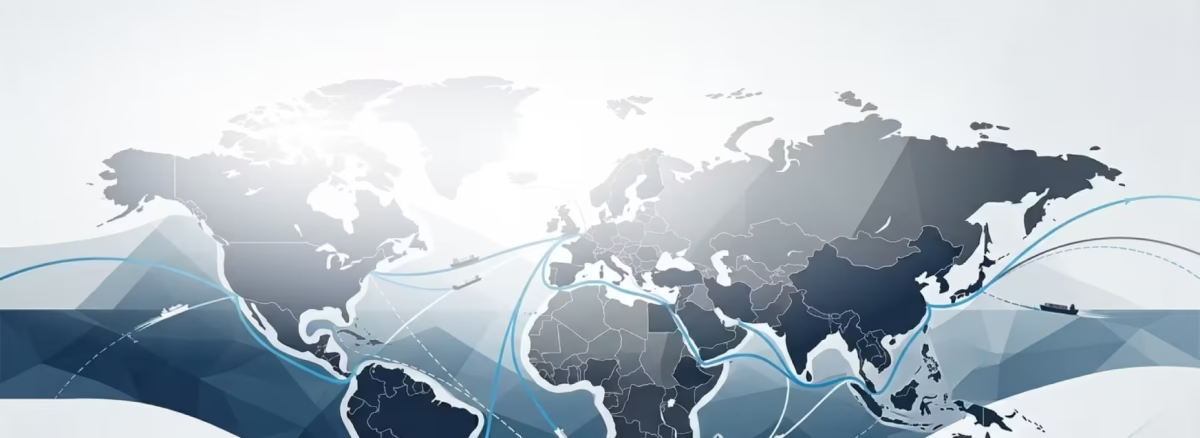
A critical corridor for global maritime logistics
The Strait of Hormuz is one of the most sensitive corridors in international maritime trade. Beyond its geopolitical relevance, its logistics importance lies in the volume of energy cargo and general goods that transit daily through this strategic passage. Following several days of operational uncertainty, the United States and Iran announced a temporary truce that includes reopening the strait, although under conditions that do not guarantee immediate normalization of maritime traffic.
From a logistics perspective, these scenarios rarely translate into instant recovery, but rather into gradual operational adjustments affecting routes, transit times, and costs.
Operational adjustments and accumulated congestion
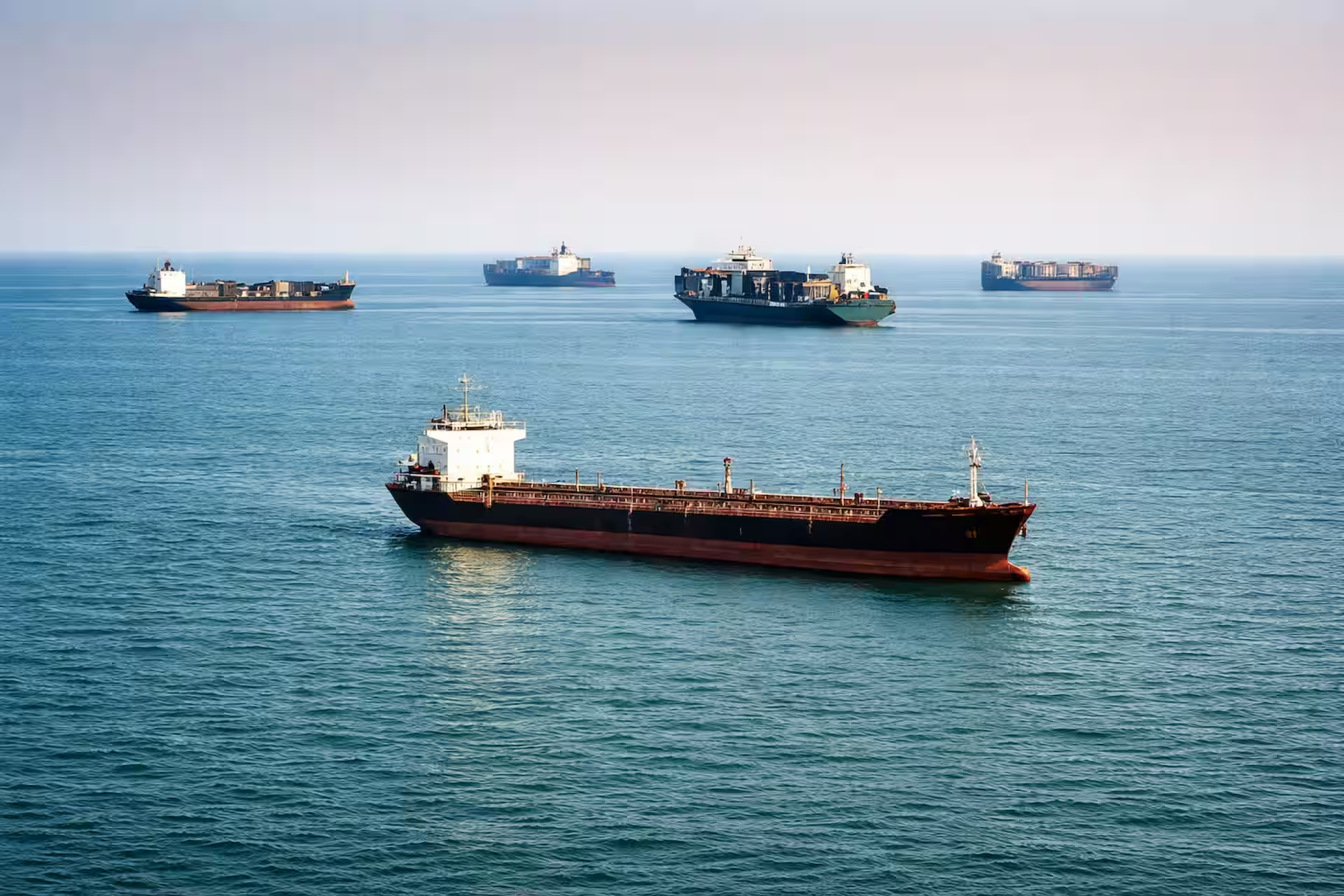
During the period of tension, many vessels delayed transits or diverted routes to mitigate risk. This led to vessel accumulation near the strait, increasing waiting times and operational pressure on alternative routes. At the same time, reduced maritime flow disrupted schedule regularity, forcing exporters and importers to reschedule shipments and adjust supply planning.
Conditional reopening: gradual normalization
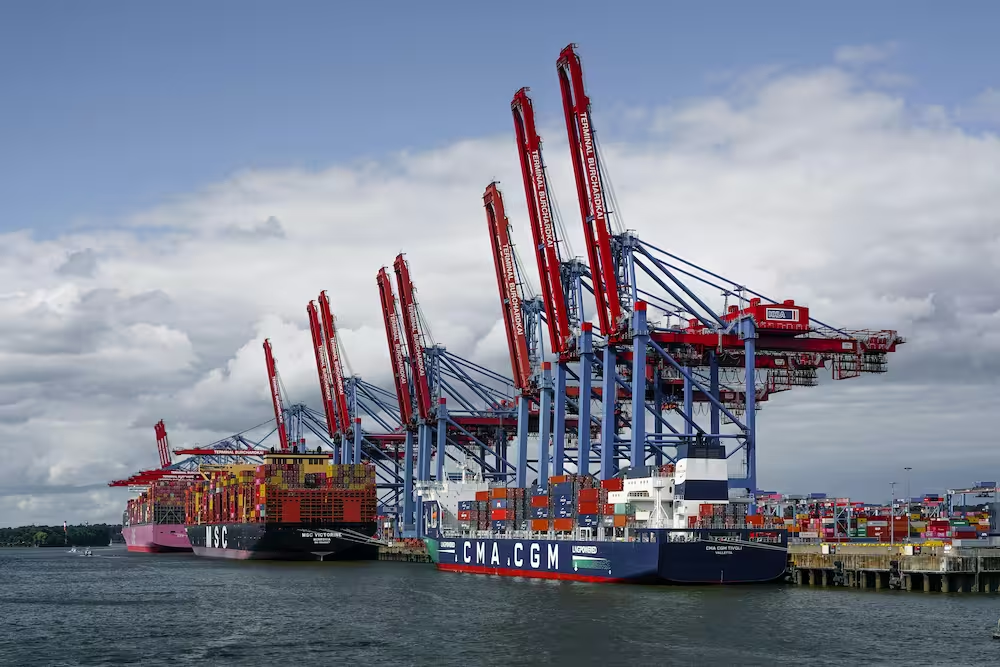
Although Iran has expressed its intention to reopen the strait, the lack of full alignment with the U.S. position means the reopening does not immediately eliminate operational risk. Shipping lines and logistics operators are therefore resuming operations progressively, evaluating security conditions, insurance requirements, and transit times before fully restoring services. For shippers, this translates into a need to plan for potential variations in schedules and lead times.
Reopening does not immediately eliminate operational risk. Planning with updated information makes the difference.

Impact on logistics costs and insurance
The increased risk in the region had a direct impact on operating costs. Higher risk exposure resulted in increased maritime insurance premiums for vessels transiting the strait.
Additional cost pressures continue due to:
- route deviations
- extended sailing times
- higher fuel consumption
These factors continue to influence freight rates even after partial reopening.
Supply chain planning implications
Volatility in such a critical logistics corridor requires companies to reassess their supply chain strategies.
Uncertainty in transit times and operating conditions affects:
- delivery scheduling
- inventory management
- coordination with inland transport and warehousing
Energy-dependent industries and long-haul trade sectors are particularly vulnerable to these adjustments.

Logistics outlook: anticipation under volatility
If the truce holds, maritime traffic may gradually recover. However, any shift in the geopolitical balance could lead to new operational adjustments in the short term. In this environment, route diversification, continuous risk assessment, and operational visibility become essential to limit impact.
How Fenix Global Cargo supports its clients
At Fenix Global Cargo, we support importers and exporters in managing maritime operations under volatile conditions by providing visibility into routes, transit times, and logistics alternatives. Our team continuously monitors carrier operational changes and coordinates solutions that help anticipate impacts, reduce risk, and maintain shipment continuity.
Operational volatility requires visibility, analysis, and responsiveness.