Critical Context in Colombia’s Main Pacific Port
In recent weeks, the Port of Buenaventura has been at the center of national attention due to serious difficulties in its logistics operations that have affected transporters, port operators, and the flow of Colombia’s foreign trade. Situations such as lines of more than 25 km of cargo vehicles, delays of more than seven hours to access terminals, and the retention of empty containers have generated an increase in operating costs and frustration in the transport sector.
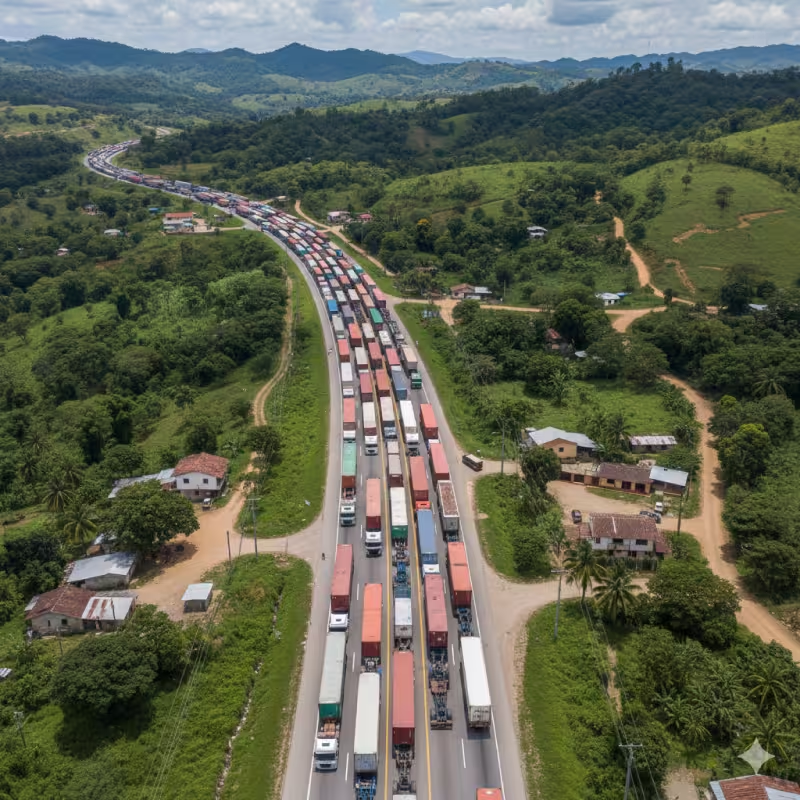
Cargo transporters expressed their dissatisfaction through demonstrations that blocked the main access road to the port, citing the lack of institutional control at the terminals and the inability to meet scheduled appointments due to congestion.
Additionally, local communities also carried out blockades in other access areas, such as the entrance to the Aguadulce Port, motivated by road deterioration in their neighborhoods, although these blockades were lifted after dialogue with local authorities.
If you need logistics support, contact us and speak with a professional.
Causes Behind Operational Strain
Transporters have reported having to face long lines and excessive waiting times to pick up or deliver cargo, due to the combination of congestion at road access points and deficiencies in internal service processes at port terminals.
One of the structural causes highlighted in several reports is the accumulation of empty containers in yards and terminals, which limits available space and causes delays in cargo retrieval. Although this is a long-standing challenge, its impact has been particularly visible in daily operations.
The conditions of the Buga–Buenaventura road, the main land corridor to the port, have been critical for years, with recurring blockades and constant congestion that hinder the movement of cargo trucks.
Shock plan: 24/7 operation and immediate measures
In response to this situation, the Ministry of Transportation, led by Minister María Fernanda Rojas, presented a shock plan with urgent measures to improve port logistics at the Port of Buenaventura.
The central measure of the plan consists of extending the operating hours of the entire logistics chain—including container yards, appointment systems, and port access areas—to 24 hours a day, seven days a week. This aims to maintain a constant cargo flow, reduce bottlenecks, and prevent new congestion.
How can this benefit your logistics?
Continuous operations improve appointment availability for transporters and reduce idle time. If your supply chain depends on port efficiency, consider integrating these new schedules into your cargo planning.
The government established a Unified Command Post (PMU) with the participation of the Superintendence of Transportation, DIAN, Dimar, and other entities. This structure allows critical situations to be assessed in real time and responses to be coordinated among institutions to maintain logistics operations and ensure regulatory compliance.
As part of the shock plan, a requirement was established for shipping lines to evacuate empty containers as an immediate measure, through administrative orders issued by the Superintendence of Transportation. Strict compliance with operational commitments by port societies will also be required.
The plan includes the participation of the Ministry of Defense in monitoring access roads, with the aim of guaranteeing safe conditions for transportation and reducing the likelihood of new blockades.
Impact for importers, exporters, and transporters
These measures seek to:
- Reduce operating times that have historically generated delays and additional costs.
- Improve cargo loading and unloading flow by eliminating inefficiencies in port service.
- Guarantee fairer and more competitive conditions for cargo transporters.
For companies and logistics operators, this represents an opportunity to optimize mobility strategies, avoid bottlenecks, and align operations with new institutional guidelines.
Do you want to optimize your logistics operation?
Conclusion
The operational crisis at the Port of Buenaventura, marked by congestion, blockades, and delays, has created significant challenges for transporters and foreign trade. The implementation of the shock plan with 24/7 operation, interinstitutional control, and clear operational requirements represents a strong response to mitigate these problems and improve Colombia’s logistics competitiveness.
Do you need reliable logistics for your imports or exports? At Fenix Global Cargo we offer maritime, air, and land transportation, as well as cargo insurance and customs operations.
- Ministra de Transporte anuncia plan de choque en el puerto de Buenaventura con operación 24/7 y control permanente
- La Ministra del Transporte anuncia plan de choque para agilizar la logística portuaria en Buenaventura
- Operación 24/7, contenedores vacíos y un Puesto de Mando Unificado: el plan de choque que busca salvar la operación en el puerto de Buenaventura
- Reportan bloqueo de transportadores en Buenaventura por filas monumentales y demoras en las terminales portuarias
- Diálogo institucional permitió desbloquear vía de acceso al puerto Aguadulce en Buenaventura
- Alerta en Buenaventura: más de 25 km de congestión y hasta siete horas de espera frenan la carga del país