A shift in international trade dynamics
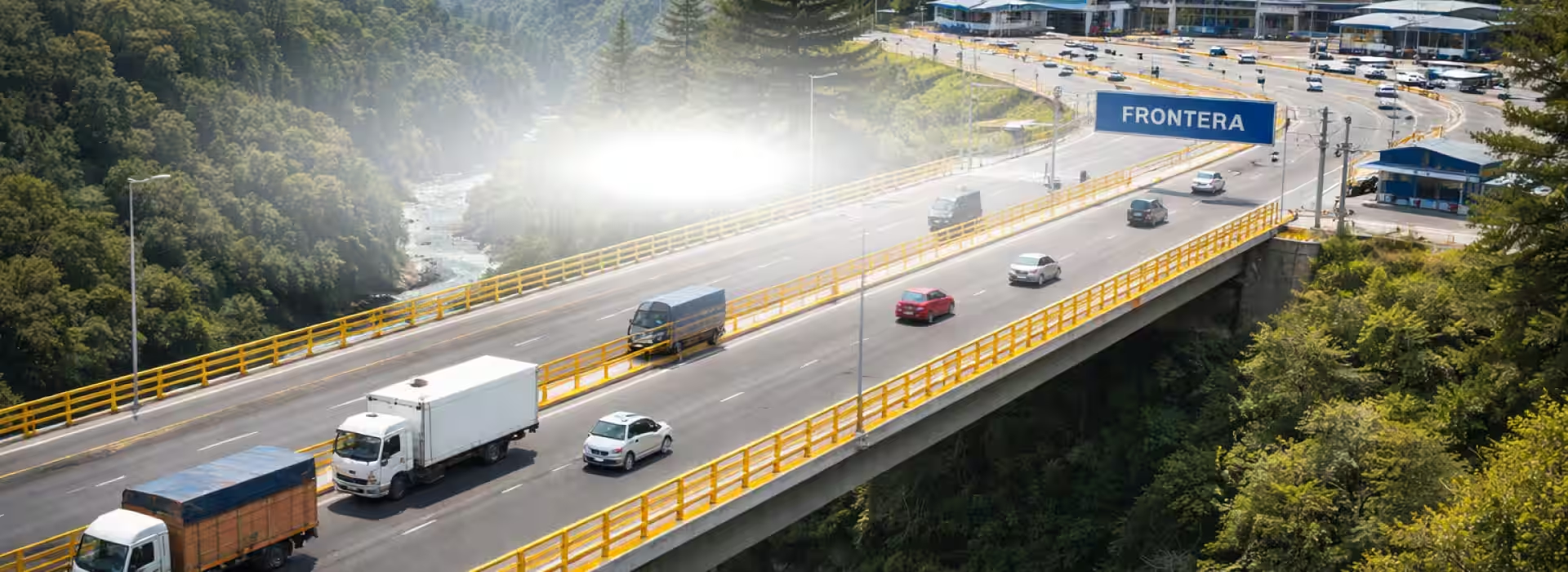
Nearshoring has become one of the main trends in foreign trade in recent years. Companies, especially those with operations linked to the United States, are rethinking their supply chains in order to bring production and distribution closer to their end markets. In this context, Colombia has begun to position itself as a strategic destination. Various analyses agree that its geographic location, access to multiple trade agreements, and logistics connectivity make it a relevant player in this transformation.
Colombia as a strategic nearshoring destination
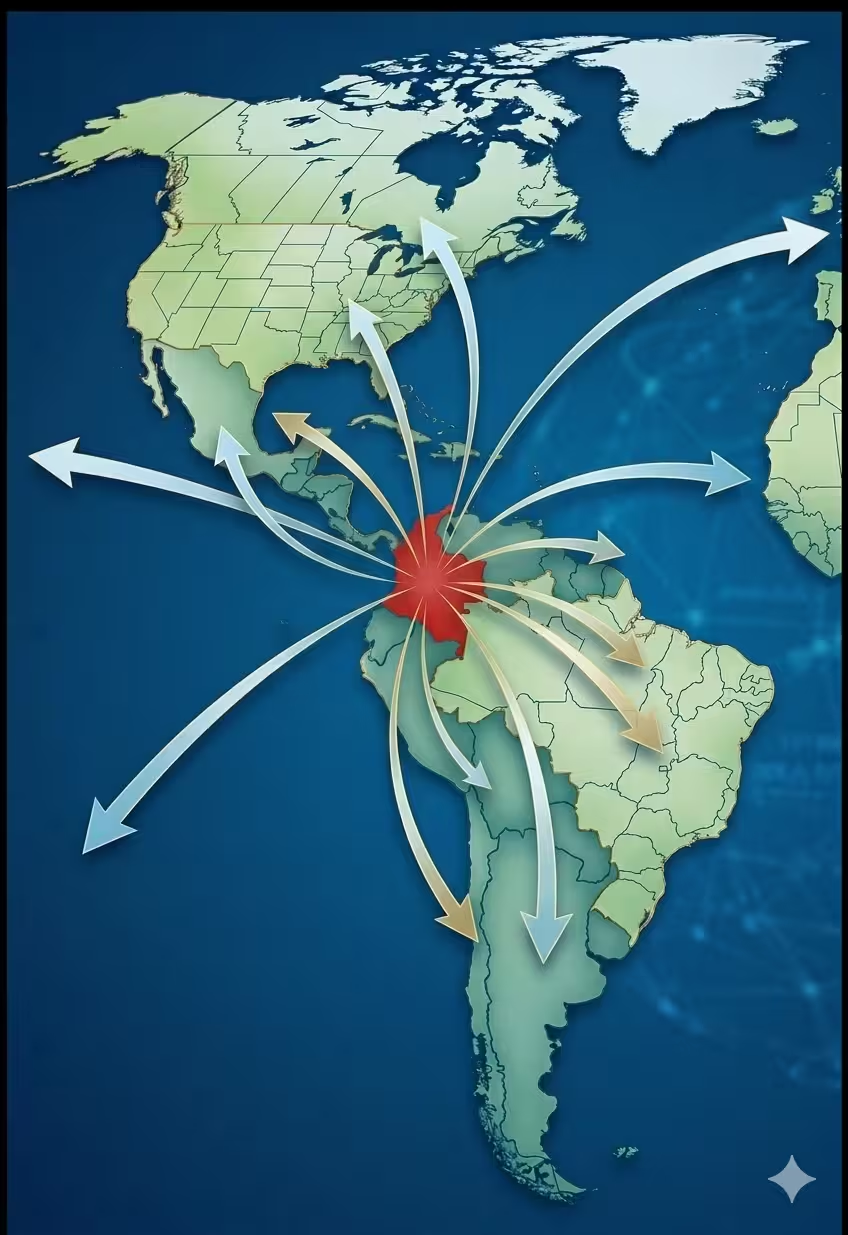
The analyzed content highlights that the country offers favorable conditions to attract foreign investment aimed at relocating operations. Proximity to the United States allows for reduced transit times, directly impacting the efficiency of logistics chains.
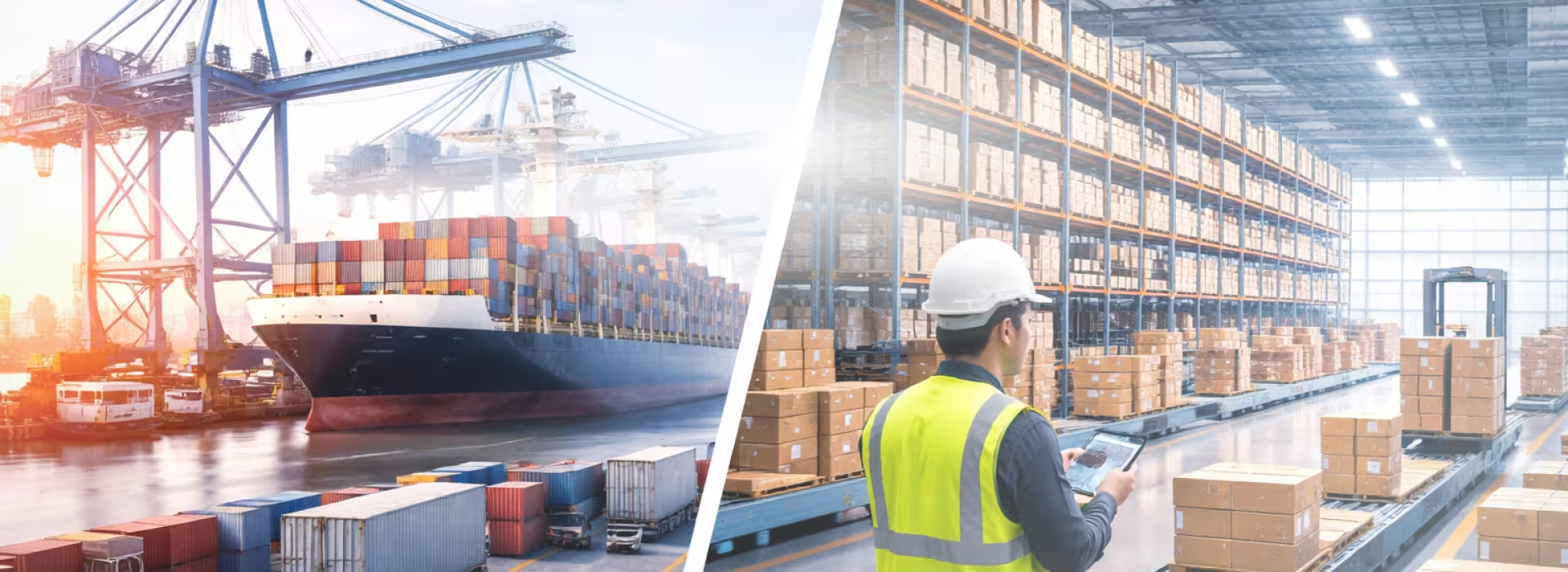
Additionally, Colombia has port infrastructure on both oceans, facilitating access to international trade routes. This enables greater operational flexibility with markets in the Americas, Europe, and Asia.
It is also mentioned that the business environment has been adapting to meet this demand, with logistics solutions that include storage, distribution, and more specialized foreign trade services.
Logistics impacts of nearshoring growth
Reduced transit times and greater predictability
One of the most relevant effects of nearshoring is the reduction in delivery times. By bringing production centers closer to the end market, dependence on long and complex routes is reduced, allowing for greater stability in transit times. This is especially relevant in scenarios where global supply chains have faced disruptions, as it enables companies to operate with greater control and predictability.
Increased demand for logistics services
The rise of nearshoring in Colombia is generating greater pressure on logistics services. From international transport to local distribution, companies require more agile, integrated, and scalable solutions. International lockers and other logistics intermediation solutions are playing an important role by facilitating access to markets and optimizing import and export processes.
Connect your cargo with agile and secure solutions, so your operation flows without interruptions.
Evolution of infrastructure and services
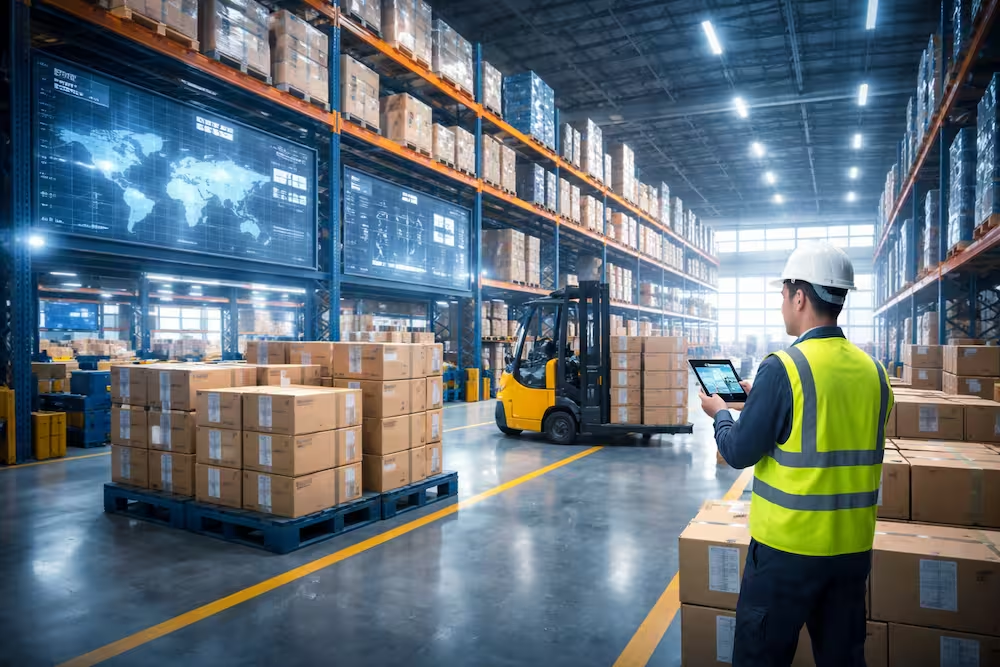
This trend is also driving the modernization of logistics infrastructure. Ports, distribution centers, and logistics operators are adjusting their capabilities to respond to higher demand and more sophisticated requirements.
This includes improvements in traceability, response times, and cost optimization—key factors to remain competitive in an increasingly demanding international trade environment.
Foreign trade trends toward 2026
The consulted analyses agree that nearshoring will continue gaining relevance in the coming years. Colombia is shaping up as a regional logistics hub, provided it strengthens its infrastructure and maintains competitive conditions for investment. Companies are also prioritizing more resilient supply chains, favoring relocation toward nearby and reliable countries.
Implications for exporters and importers
For Colombian companies, nearshoring represents both an opportunity and a challenge. On one hand, it opens the door to new business and markets. On the other, it demands greater operational efficiency and logistics adaptability. Companies that manage to optimize their processes, reduce transit times, and offer comprehensive solutions will have a clear competitive advantage in this new environment. The following section presents a speculative analysis based on observed trends. This content does not constitute confirmed facts and should not be interpreted as a definitive projection.
The growth of nearshoring could intensify competition for logistics capacity in Colombia, especially in ports and land transport. If demand exceeds installed capacity, bottlenecks may arise, affecting operational times and costs. Likewise, increased cargo flow could put pressure on logistics rates, particularly in storage and distribution services. This would force companies to seek strategic partners to maintain efficiency without increasing costs. In this scenario, anticipation, planning, and logistics execution capacity will be decisive factors to capitalize on nearshoring opportunities.
How to capitalize on nearshoring with a logistics partner
The current environment requires comprehensive logistics solutions. It is not only about moving cargo, but about efficiently managing the entire supply chain. Fenix Global Cargo positions itself as a strategic partner for companies looking to take advantage of nearshoring in Colombia, offering services adapted to new international trade dynamics, focused on efficiency, traceability, and cost optimization.
Nearshoring opens opportunities, but also logistical challenges. With Fenix Global Cargo, your supply chain gains efficiency, traceability, and control.
- El ‘nearshoring’: una oportunidad económica para Colombia ante un posible segundo mandato de Trump
- Casilleros internacionales que impulsan el nearshoring colombiano
- Tendencias de Comercio Exterior en Colombia para 2026
- Nearshoring in Colombia: Why US Companies Are Turning South for Smarter Growth in 2026