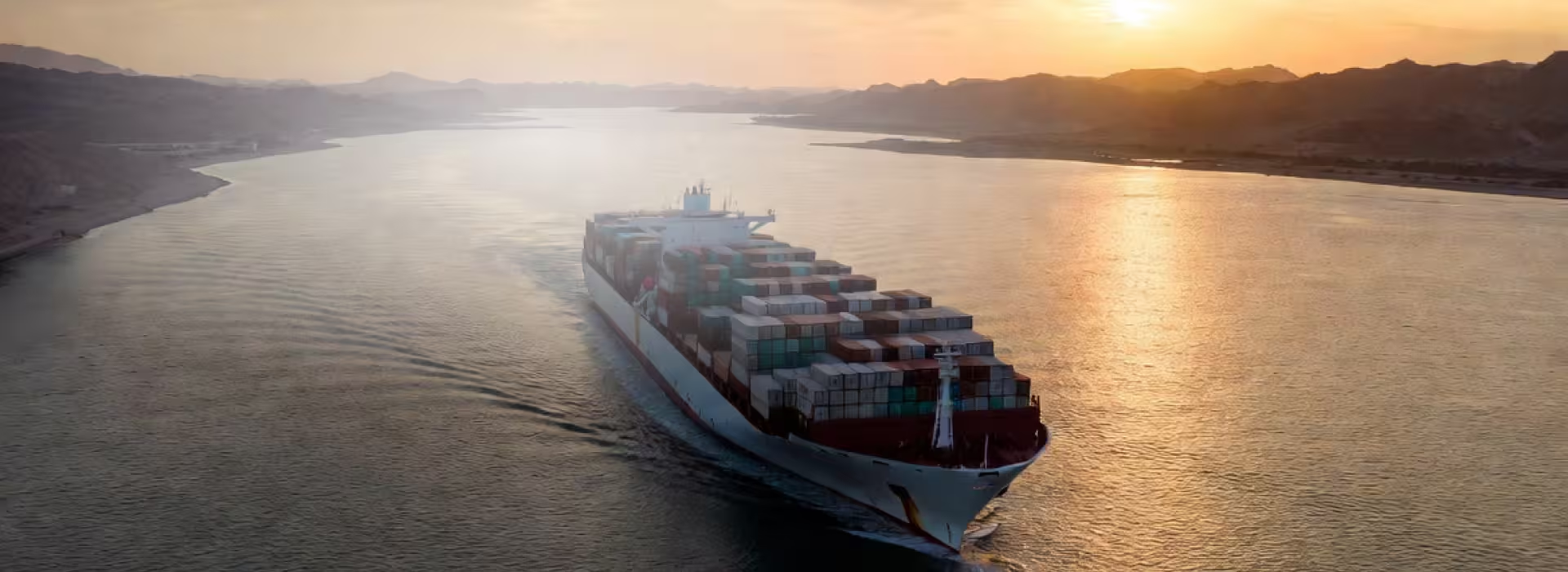
The Iranian Parliament is evaluating a bill that would allow transit fees to be charged to ships navigating through the Strait of Hormuz, one of the most strategic maritime routes for global trade. The initiative emerges amid a scenario of geopolitical tensions and disruptions in maritime traffic in the region. The strait is a critical point for global energy transport. Around one fifth of the oil and liquefied natural gas traded worldwide moves through this route, making any regulatory or operational change an immediate factor affecting international trade and maritime logistics.
A bill that seeks to formalize transit tariffs
According to international media reports, Iranian lawmakers are working on legislation that would allow tariffs to be imposed on ships using the strait. The proposal is part of an attempt to leverage Iran’s strategic position in this key maritime route.
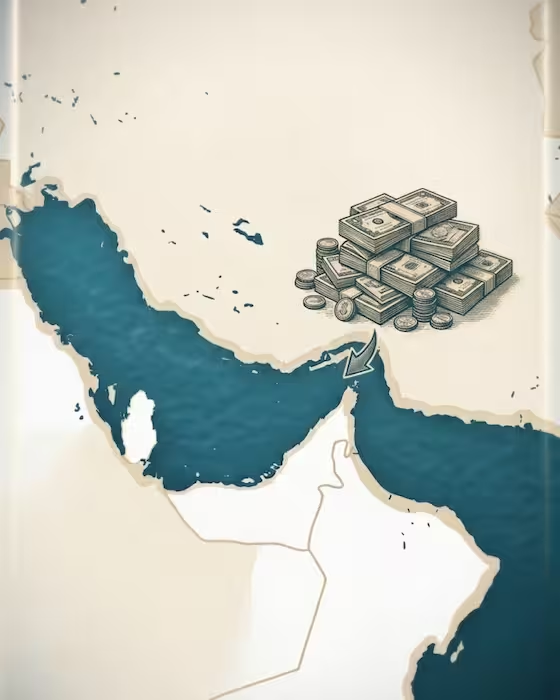
The initiative also arises in a context of war and growing Iranian control over maritime transit in the area. Recent reports indicate that the country is preparing legislation that would allow it to charge ships for guaranteeing their safe passage through the strait. The proposal has raised concerns in energy markets and in the shipping industry due to the central role this route plays in global oil supply.
When routes get complicated, your logistics needs reliable allies.
A maritime corridor under tension
The Strait of Hormuz connects the Persian Gulf with the Gulf of Oman and is considered one of the main chokepoints of global energy trade. Any disruption in this maritime passage can directly affect the flows of oil, gas and goods that circulate between the Middle East, Asia, Europe and the Americas. Recent military tensions have reduced maritime traffic and created uncertainty about the stability of the route. This context has led different actors in international trade to closely monitor regulatory decisions that may arise regarding transit through the strait.
In logistics, every decision matters: let’s ensure the flow of your cargo together.
Logistics impacts the measure could generate
The possibility of establishing transit tariffs in a strategic route such as the Strait of Hormuz introduces new cost and risk factors for international logistics.
Among the logistical effects that could be observed are:
If ships must pay tariffs to cross the strait, shipping companies may transfer those costs to freight rates.
Because a large portion of global oil moves through this route, any disruption or increase in transit costs can affect global energy prices.
Regulatory changes or restrictions in key maritime routes often force companies to reconsider their logistics strategies and commercial routes.
A new risk factor for international trade
The debate over this potential law appears at a time when the Strait of Hormuz is already facing geopolitical tensions and disruptions in maritime traffic.
Given the volume of energy that passes through this route, any change in transit conditions could have effects far beyond the Persian Gulf region, impacting energy markets, maritime transport and global supply chains.
The following section corresponds to a speculative analysis based on the information available in the cited news sources. It does not constitute a confirmed fact or a definitive projection.
If the Iranian bill advances and transit tariffs are formalized for vessels crossing the Strait of Hormuz, international maritime transport could face a new cost component in one of the most important energy routes in the world.
Global impacts, local solutions: your cargo deserves strategic support.
An increase in costs associated with transiting the strait could be transferred to maritime freight rates, especially in segments linked to the transportation of oil, fuels and raw materials. Additionally, any upward pressure on oil prices usually has direct effects on global logistics, since fuel represents one of the main operational costs of maritime transport.
In a context of geopolitical tension, uncertainty regarding access to strategic routes can also lead to adjustments in shipping companies’ decisions, changes in trade routes and increased pressure on export and import costs.
- Irán prepara una ley para cobrar peaje por Ormuz, ataques cruzados y caos sobre la negociación: así viene el día 27 de guerra
- Iran seeks to formalise Hormuz transit tolls with new bill
- Iran considers levying transit fees on ships in Hormuz Strait, lawmaker says
- Parlamento iraní impulsa ley para cobrar peajes a buques en Ormuz
- Toll system in Strait of Hormuz? Iran drafts bill to charge ships for safe passage amid war