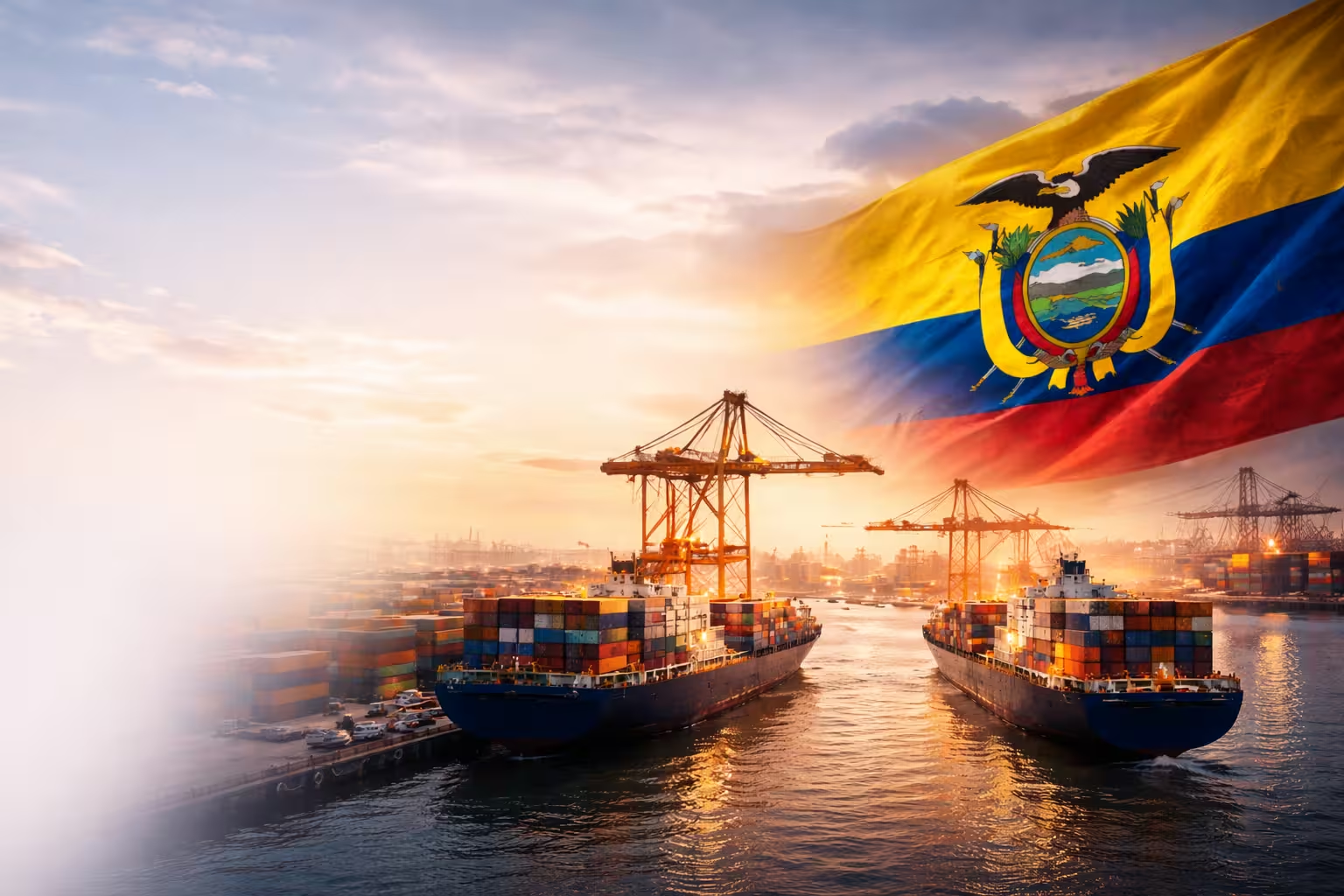
Ecuador increased tariffs on Colombian products from 30% to 50%, a move that marks a new escalation in the economic relationship between the two countries. The increase, presented as a national‑security measure to confront drug trafficking at the border, adds to a conflict that has evolved since early 2026 and now includes reciprocal tariffs, trade restrictions and energy‑related decisions.
How the conflict began: tensions over security and trade balance
The dispute began when Ecuador imposed a 30% tariff on Colombian imports, arguing the need to strengthen its trade balance and protect economic security. The measure affected nearly 2,700 Colombian companies that exported goods worth more than 1.846 billion dollars to Ecuador in 2025.
The impact was immediate in sectors dependent on binational trade and in strategic activities related to cargo flows, energy and crude transport.
This initial context is essential to understand the current escalation: what began as a tariff adjustment has turned into a dispute involving not only trade measures but also energy actions and mutual concerns over border security.
Borders change, trust does not. Plan with Fénix Global Cargo.
Ecuador’s new decision: a 50% tariff framed as a security measure
In its latest announcement, Ecuador raised tariffs from 30% to 50%, claiming that Colombia has not implemented clear and effective measures to address security issues along the shared border.
According to the Ministry of Production, Foreign Trade and Investments:
- the measure is sovereign,
- it is based on national‑security criteria,
- and it seeks to reinforce shared responsibility in the fight against drug trafficking.
President Daniel Noboa’s government argues that confronting criminal groups requires joint efforts, but considers progress so far insufficient. The new 50% tariff amplifies the effects already felt by Colombian exporters after the first increase.

Colombia’s response: 30% reciprocal tariff and land‑entry restrictions
In response to the initial measure, Colombia applied a reciprocal 30% tariff on 73 subheadings originating in Ecuador. This included agricultural, fishery and aquaculture goods, combined with land‑entry restrictions related to sanitary, phytosanitary and security risks.
The strategy pursued two objectives:
- protecting national sectors affected by the Ecuadorian measure,
- rebalancing bilateral trade through reciprocity.
With Ecuador’s new 50% tariff, Colombia’s earlier response now becomes part of a broader escalation between both countries.
When rules change, logistics strategy is your advantage. With Fénix Global Cargo, your operation remains strong.
A second front: Colombia’s temporary suspension of electricity exports
Parallel to these trade measures, Colombia suspended electricity sales to Ecuador, describing the decision as necessary to safeguard domestic supply.
Authorities explained that the measure responds to:
- climate variability,
- projections of reduced energy availability,
- the need to prioritize local demand.
The suspension has significant implications for Ecuador, which depends on Colombian electricity for nearly 12% of its national demand. This adds another layer to the ongoing bilateral tension.

The following section presents non‑definitive analysis based exclusively on the information described and without adding external data. The new 50% tariff marks an inflection point, shifting the dispute from a single tariff increase to a wider escalation. Ecuador frames the measure within its fight against drug trafficking, while Colombia had already taken steps to rebalance trade and protect domestic sectors. The convergence of tariffs, border controls and energy actions shows that the conflict now spans economic, security and strategic‑supply dimensions. If it continues, impacts could expand across productive sectors and value chains in both countries.
Ecuador’s decision to raise tariffs to 50% adds a new layer to a dispute that now involves trade, security and energy, reshaping the bilateral relationship at a moment of high sensitivity for both economies.
Do you need reliable logistics for your imports or exports? At Fenix Global Cargo we offer maritime, air, and land transportation, as well as cargo insurance and customs operations.