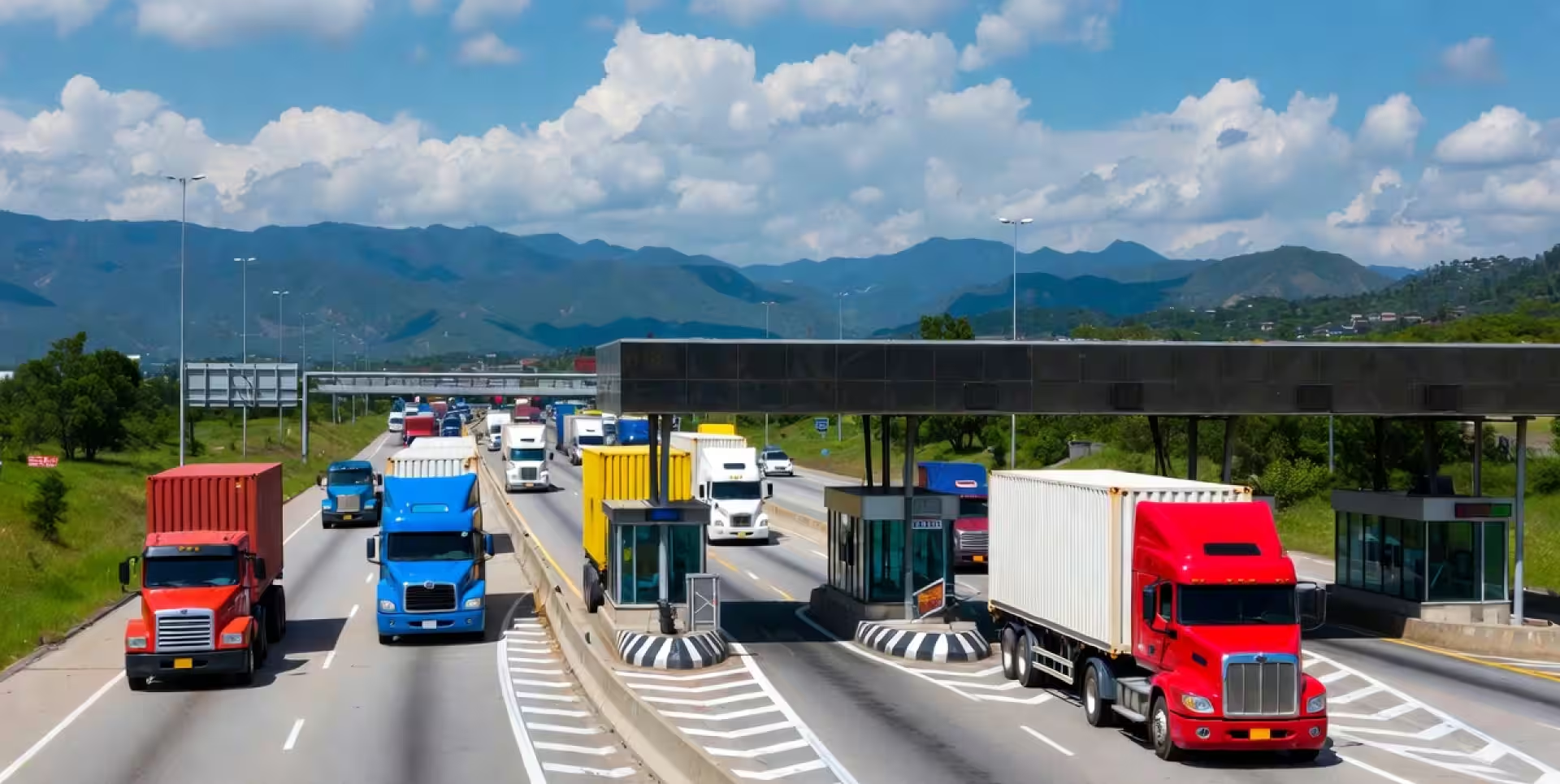
Land transportation continues to be one of the pillars of logistics in Colombia. Most domestic cargo is moved by road, which means that any modification to road infrastructure or its associated costs has a direct effect on the logistics operations of companies, transport providers, and cargo owners. In this context, the announcement made by the National Government regarding toll adjustments starting in 2026, along with the elimination of some toll stations, introduces a new variable that must be carefully analyzed from a logistics perspective.
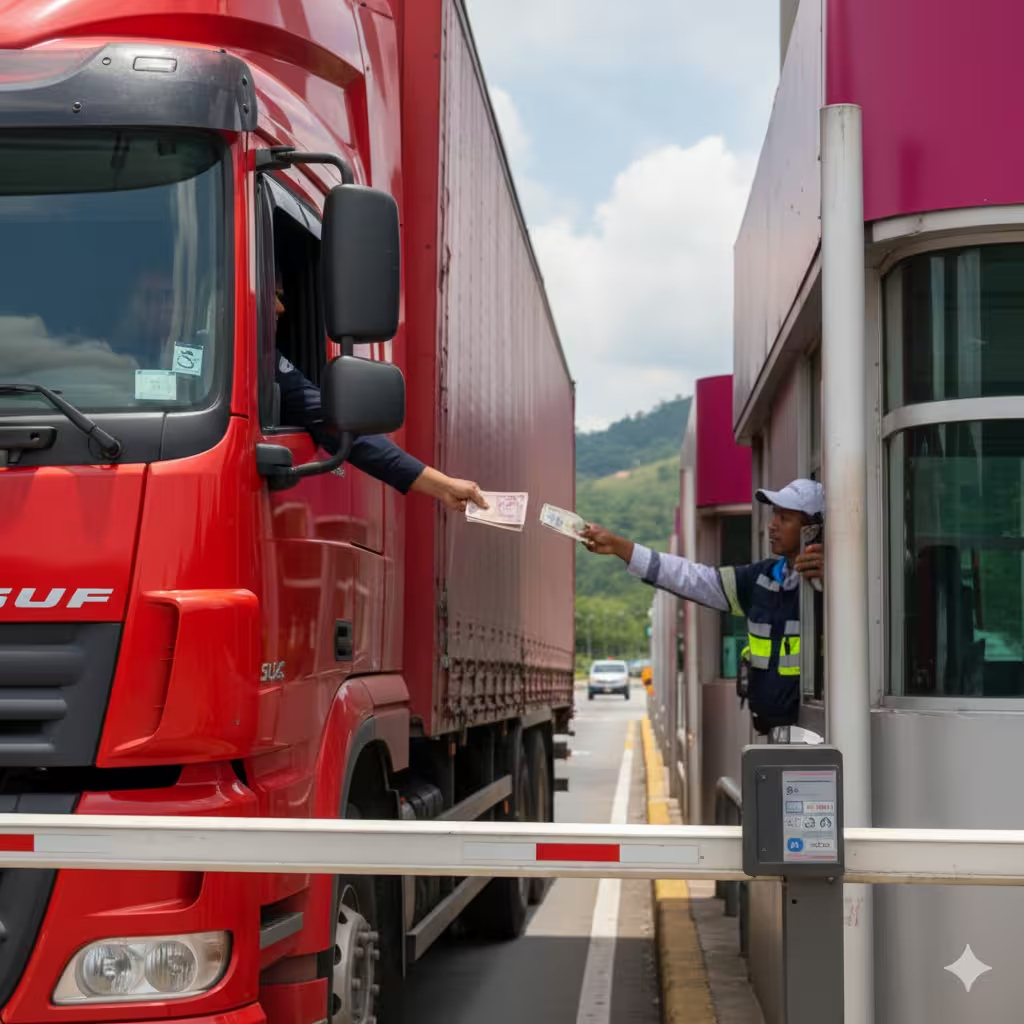
The Weight of Tolls Within Logistics Costs
Tolls are not an isolated cost. In land transportation operations, especially on interdepartmental or long-distance routes, their impact is cumulative. Each toll station adds to the total cost of the trip and, depending on the vehicle type and route used, can represent a relevant portion of operating expenses.
For this reason, tariff adjustments not only affect individual drivers but also have a direct effect on the cost structure of cargo transportation, influencing route planning, fleet allocation, and the competitiveness of operations.
Confirmed Increases Starting in January 2026
The Government confirmed that, starting in January 2026, an increase will be applied to most toll stations across the country. This adjustment responds to contractual mechanisms established with road concessions and is mainly linked to the annual update based on the Consumer Price Index (CPI). This type of increase is not an exceptional measure, but rather part of the conditions agreed upon to ensure the financial sustainability of concessioned road projects.
Removal of Tolls on the Caribbean Route
Along with the increases, the removal of seven toll stations located on the Caribbean Route was announced, following the early termination of the concession contract. These roads will now be managed by Invías.
From a logistics perspective, this decision could generate specific cost reductions on certain corridors. However, its impact must be analyzed on a case-by-case basis, depending on how frequently these routes are used within transportation operations.
Tolls With the Highest Tariffs After the Adjustment
Despite the removal of some toll stations, others will continue to rank among the most expensive in the country after the 2026 adjustment. Stations such as Pipiral, Túnel de Oriente, Aburrá, and Cisneros will maintain high tariffs, reinforcing the need to carefully evaluate their impact within logistics routes.
Opinion: Possible Effects on Land Logistics Costs
This analysis does not constitute a definitive conclusion.
Considering the weight that tolls have within road transportation, it is reasonable to anticipate that the 2026 adjustments may generate variations in logistics costs, especially for operations that rely heavily on national routes. While the removal of certain toll stations may ease costs on specific corridors, general increases could offset or even exceed these benefits on other routes. The final impact will depend on route design, trip frequency, and the type of cargo being transported.
The Importance of Logistics Planning in 2026
In an environment where logistics margins are increasingly tight, anticipating changes in structural costs such as tolls becomes essential. Periodic route reviews, scenario simulations, and cost control enable companies to adapt more efficiently to this type of adjustment. For land transportation in Colombia, 2026 will not only bring tariff changes, but also the need for more strategic, data-driven logistics management.
Do you need reliable logistics for your imports or exports? At Fenix Global Cargo we offer maritime, air, and land transportation, plus cargo insurance and customs operations.