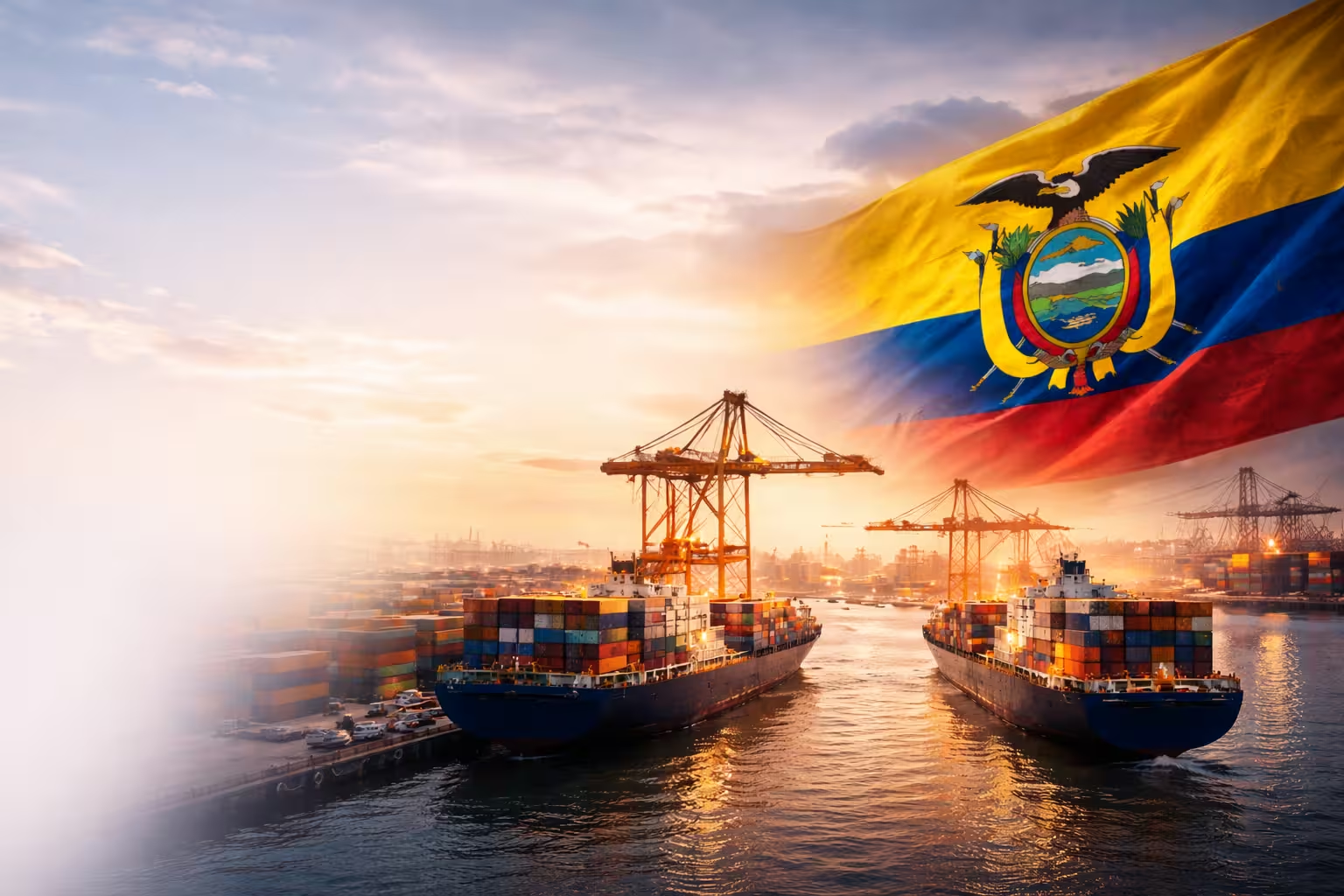
In 2025, Colombia drew international attention for an unusual reason: its economic performance was recognized as one of the strongest in the world. Several economic analyses, led by The Economist’s annual ranking, placed the country among the top-performing global economies.
This recognition was not driven by a single indicator, but by a combination of macroeconomic results that stood out in a challenging global environment.
The Ranking That Put Colombia on the Global Map
The starting point of this narrative was the list published by The Economist, which compares economic performance across multiple countries throughout the year. In this assessment, Colombia ranked among the leading economies, outperforming several developed nations as well as peers in Latin America.
The ranking did not rely solely on GDP growth. It also considered factors such as:
- Inflation trends
- Macroeconomic stability
- Labor market performance
- Resilience to external shocks
This broader evaluation helps explain why Colombia stood out in 2025.
Economic Growth in a Difficult Global Context
One of the most highlighted aspects was Colombia’s ability to grow while much of the global economy slowed down. As many countries faced stagnation or weak performance, Colombia maintained positive growth, supported by sectors such as commerce, services, and agriculture.
While growth was not extraordinary, it was steady—an important distinction in a year marked by uncertainty and volatility worldwide.
Inflation and Macroeconomic Adjustments
Another key factor was inflation behavior. After a period of strong price pressures, Colombia made progress in stabilizing inflation, which contributed to greater economic predictability.
Monetary policy decisions and macroeconomic adjustments played a role in restoring balance, sending clearer signals to both domestic markets and international investors.
Labor Market and Domestic Activity
Economic performance was also reflected in employment figures. Throughout 2025, Colombia showed improvements in labor market conditions, supported by the recovery of sectors that generate significant employment.
This internal momentum strengthened consumer activity and helped sustain overall economic growth, a point frequently noted in economic analyses referenced by specialized media.
Not Without Challenges: What Still Lies Ahead
The same sources that highlight Colombia’s strong performance also point out ongoing challenges. Among the most frequently mentioned are:
- Medium-term fiscal sustainability
- The need to maintain investor confidence
- Exposure to external shocks in an uncertain global environment
International recognition does not mean structural issues have disappeared—it indicates that Colombia navigated a complex year more effectively than many other economies.
Why This Recognition Matters
Beyond the ranking itself, Colombia’s inclusion among the best-performing economies of 2025 carries both symbolic and practical value. It reinforces perceptions of stability, strengthens the country’s international image, and may support increased investment and economic cooperation.
In a difficult global year, Colombia managed something uncommon: standing out for its performance while many others struggled just to stay afloat.