Context of port congestion
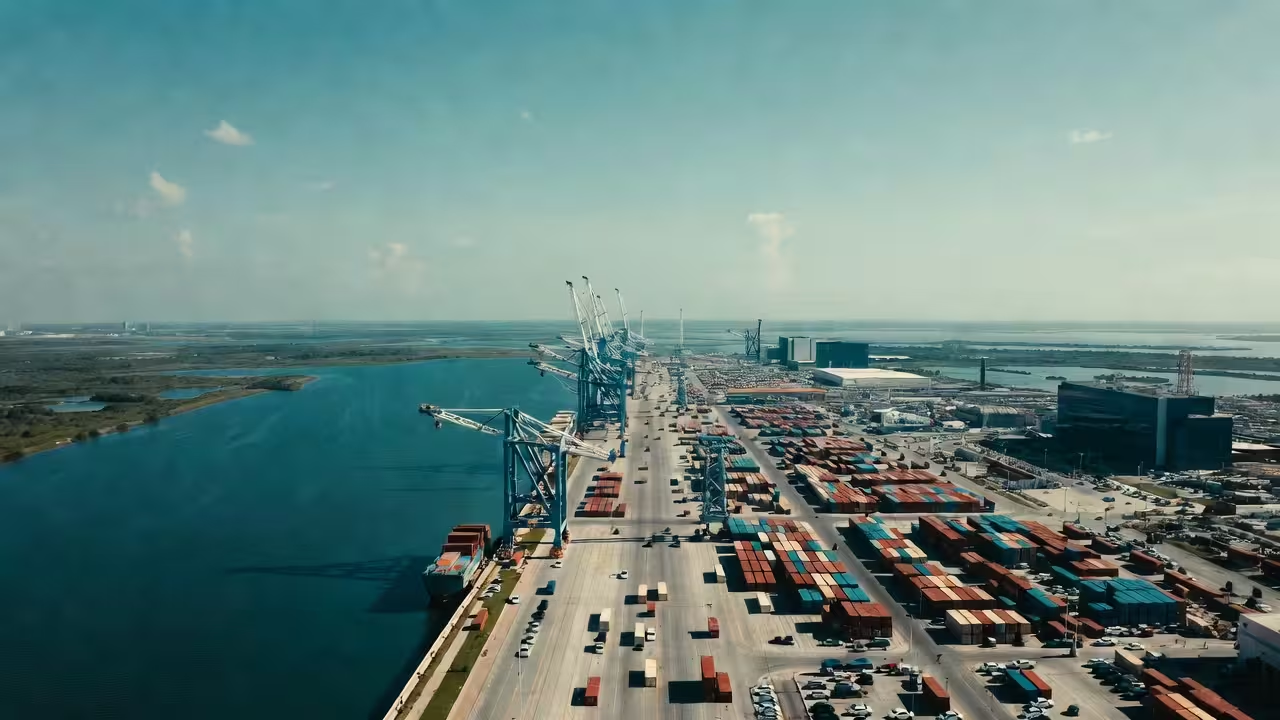
The port of Buenaventura has faced significant congestion in recent months, associated, among other factors, with the accumulation of empty containers in yards and operational areas. This situation put pressure on available infrastructure and affected normal loading, unloading, and cargo dispatch times.
According to official information released by the Ministry of Transport, the volume of empty containers came to occupy a substantial portion of the port’s operational capacity, hindering equipment rotation and the normal flow of cargo.
Shock plan and reported results
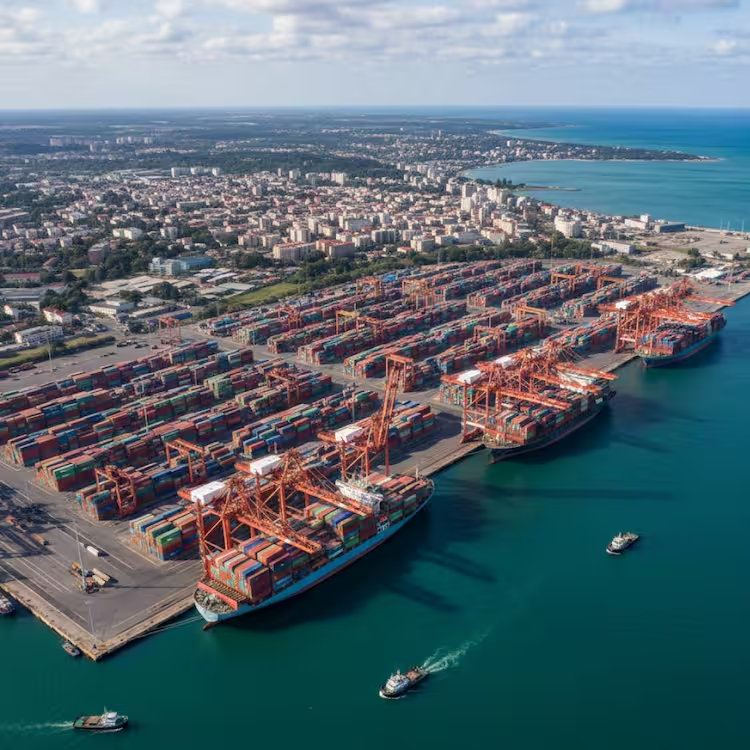
In order to ease congestion, authorities implemented a shock plan focused on accelerating the removal of empty containers and optimizing their logistical management. As a result of these measures, empty container occupancy in Buenaventura was reduced by 68%.
This decrease represents a relevant improvement for port operations, as it frees up yard space, improves internal circulation, and enables more efficient handling of full containers destined for import and export.
More space, better circulation, lower costs… turn it into a competitive advantage with our experts.
Operational impact on the logistics chain
The reduction in empty container occupancy has direct effects on the logistics chain connecting the port with transport companies, customs agencies, importers, and exporters. With greater availability of space and equipment, it becomes easier to schedule operations and reduce bottlenecks that often generate additional costs and delays.
For companies that rely on the port of Buenaventura, this scenario opens the possibility of planning shipments with greater predictability and adjusting logistics schedules with lower congestion risk.
Plan without bottlenecks, secure your shipments and turn port efficiency into an advantage for your business.
Complementary measures and institutional coordination
According to what authorities have reported, the results achieved are the outcome of coordination among government entities, port operators, and logistics stakeholders, aimed at normalizing flows and preventing new accumulations of empty containers.
Such actions seek not only to resolve the immediate situation, but also to lay the groundwork for a more orderly operation in the short term, while maintaining constant monitoring of occupancy levels.
Non-definitive analysis of the logistics scenario
The following section corresponds to an analysis of a speculative nature, based on publicly available information. It does not constitute a confirmed fact or an official projection and should not be interpreted as a definitive conclusion.
From a logistics perspective, a sustained reduction in empty container occupancy could translate into greater operational stability for the port and better conditions for decision-making by cargo owners. However, the continuity of these results will depend on whether the measures are maintained over time and whether foreign trade flows once again exceed available operational capacity.
In this context, having specialized logistics advisory support allows companies to adapt more quickly to changes in port operations and to anticipate possible adjustments in routes, timelines, and costs.
Do you need reliable logistics for your imports or exports? At Fenix Global Cargo we offer maritime, air, and land transportation, as well as cargo insurance and customs operations.