

Maritime schedule cancellations, known in the industry as blank sailings, have become a recurring tool used by shipping lines to adjust capacity in response to demand.
According to monitoring by the consultancy Drewry, approximately 7% of global sailings scheduled between April and May have been cancelled across the main East–West trade routes of international commerce.
Although these adjustments are part of the normal management of maritime transport, their operational impact can be significant for importers and exporters if not properly anticipated.
What is a schedule cancellation in maritime transport?
A schedule cancellation occurs when a shipping line decides not to operate a specific sailing that was previously scheduled within a regular service, from a specific port and after a defined date. This decision does not mean the service or route is cancelled, but rather that a single vessel rotation is removed on a specific date and port of call. The service continues operating on subsequent scheduled sailings from other ports or on later dates.
Shipping lines mainly use blank sailings to:
- Adjust available capacity when demand does not justify full operation
- Optimize fleet utilization
- Reorganize services, frequencies, and port calls
- Control operational costs during certain periods
Despite these cancellations, over 90% of scheduled sailings continue to operate, indicating that the maritime system remains active, although with localized adjustments that require additional logistics planning.
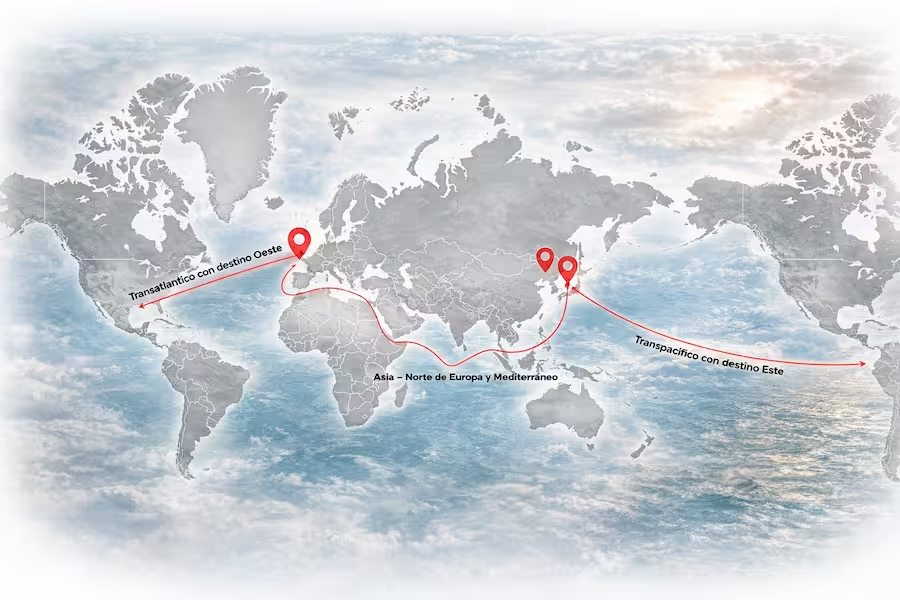
Maritime routes most affected by blank sailings
According to market data, schedule cancellations are mainly concentrated on the following trade corridors:
- Transpacific eastbound routes
- Asia – Northern Europe and the Mediterranean
- Transatlantic westbound routes
These routes connect the world’s main production and consumption centers, so any adjustment in capacity directly impacts logistics planning for importers and exporters.
Can your shipments be affected by itinerary adjustments?
Logistics impacts for importers and exporters
Schedule cancellations do not usually result in widespread disruption, but they can lead to relevant operational adjustments within the supply chain.
When a sailing is cancelled, cargo must be redistributed to subsequent services, which may lead to temporary congestion.
Waiting for the next available departure can extend transit times and affect delivery commitments.
Shipments require closer coordination to avoid additional costs related to storage, inland movements, or rescheduling.
In this context, anticipation becomes a key factor in maintaining operational continuity.
Our team continuously monitors adjustments made by major shipping lines and coordinates solutions that help anticipate impacts, reduce operational risks, and ensure the continuity of international shipments.
Why monitoring maritime schedules is critical
Having visibility over shipping schedules allows companies to anticipate adjustments before they impact operations.
Schedule tracking tools, combined with local operational analysis, help to:
- Reschedule shipments in advance
- Evaluate alternative routes or services
- Adjust inventory planning
- Reduce the risk of delays and additional costs
In an increasingly dynamic logistics environment, timely information becomes a real operational advantage.

Connect your cargo with agile and secure solutions, so your operation flows without interruptions.
Logistics planning amid capacity adjustments
When shipping lines adjust capacity, logistics moves beyond transportation and becomes scenario management.
Understanding how blank sailings affect routes enables companies to maintain operational continuity even during adjustment periods. Working with logistics partners that have local presence and schedule visibility supports a more agile and structured response to these changes.
How Fenix Global Cargo supports its clients
At Fenix Global Cargo, we support importers and exporters in planning their maritime operations by providing visibility into schedules, space availability, and logistics alternatives. Our team continuously monitors carrier adjustments and coordinates solutions that help anticipate impacts, reduce operational risk, and maintain the continuity of international shipments.

