

Context of the binational tariff crisis
Since February 1, 2026, 30% tariffs have come into effect on trade between Colombia and Ecuador, as part of a growing bilateral tension linked to disputes over border security and cooperation against drug trafficking.
According to reports from regional and national media, this decision has generated immediate impacts on land transport, particularly at the Rumichaca International Bridge, the main connection corridor between both countries.
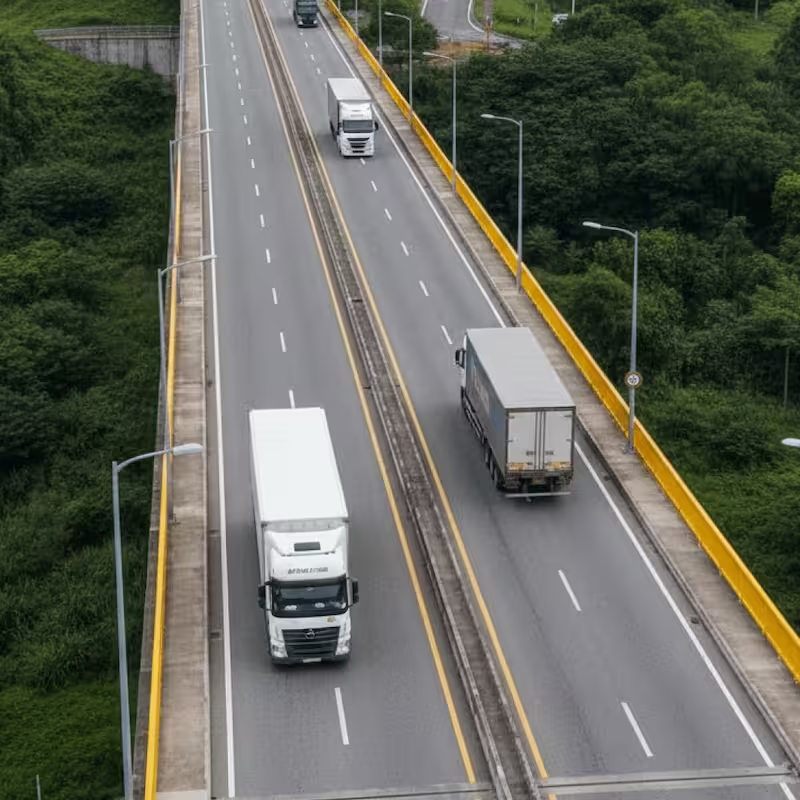
The new tariffs have been questioned by transport unions on both sides of the border, who argue that these measures contradict the free trade principles of the Andean Community, increase logistical costs, and directly affect thousands of families that depend on binational transport.
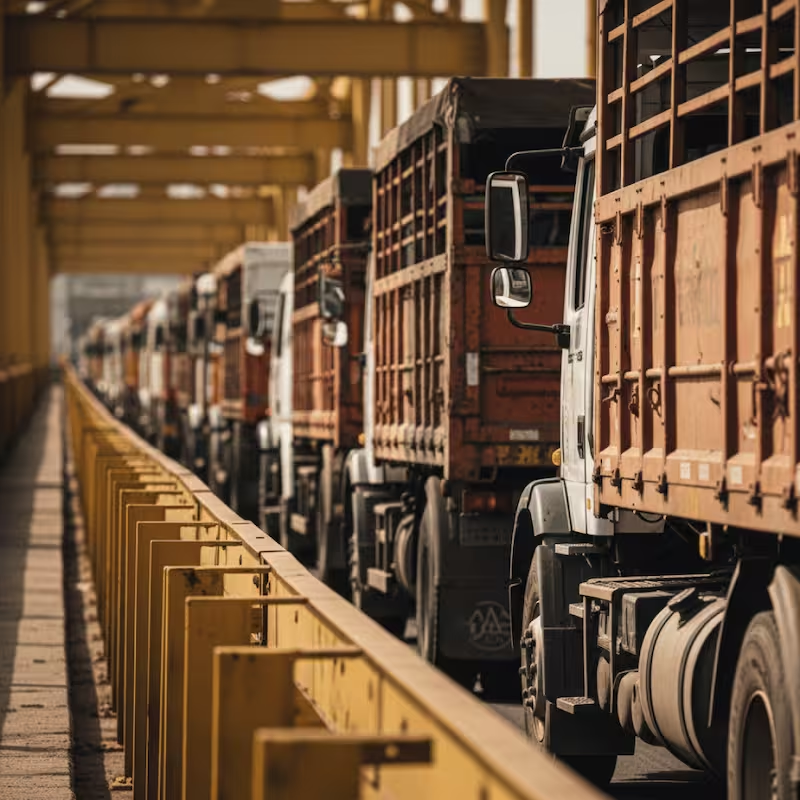
In this context, cargo flows are already experiencing significant congestion, with truck lines reaching up to 600 meters and accumulated delays since late January.
Having advance logistics planning and alternative routes becomes key to protecting the continuity of international operations.
Congestion at Rumichaca and operational disruptions
The implementation of the tariffs has caused bottlenecks at Rumichaca access points, affecting both cargo transport and passenger traffic. Transporters and merchants have warned that delays increase operating costs, reduce fleet rotation, and generate additional risks, such as deterioration of sensitive goods and failure to meet delivery schedules.
According to transport unions, the situation could worsen if the measures remain in place, with indirect effects on regional supply chains, even beyond border departments.
Evaluating contingency scenarios and adjusting transit times can help mitigate the impact of this type of crisis on the logistics chain.
“March for Border Dignity”: binational mobilization
In response to the situation, transporters have called for the “March for Border Dignity”, a binational mobilization of a peaceful and symbolic nature, aimed at demanding diplomatic dialogue and the removal of the tariffs.
Date, location, and development of the protest
The mobilization is scheduled for Tuesday, February 3, 2026, starting at 08:00 a.m., beginning in the El Éxito sector of Ipiales (Colombia). From there, participants will move in a vehicle caravan and symbolic walk toward the Rumichaca International Bridge, where they are expected to join Ecuadorian transporters for a joint gathering. Although organizers have stated that no permanent blockade is intended, they have acknowledged that temporary traffic disruptions may occur during the event.

Participation and organization
Participation of more than 1,000 transporters is expected, along with merchants and local residents. The call is supported by organizations such as the Colombian Truckers Association in Nariño and border trade unions in Ecuador.
Real-time information and logistics coordination are key to reducing risks and operational cost overruns.
Demands from the transport sector
Transport unions have raised a series of clear demands to both governments, including:
- Rejection of the 30% tariffs and other recently applied charges.
- Activation of formal diplomatic channels to resolve the dispute.
- Guarantees of free movement of goods under the Andean Community framework.
- Urgent solutions to economic losses, described by union leaders as significant.
Manuel Romo, vice president of the Colombian Truckers Association in Nariño, has stated that the situation is contradictory within a market defined as free, emphasizing that dialogue is the only viable solution.
Having specialized logistics consulting allows anticipating impacts and making more informed decisions.
Official warnings and a tense environment
While the call for the march has circulated widely in media and social networks, Ecuadorian authorities have warned of possible sanctions for disruptions to public services, generating criticism among protest organizers.
So far, no specific preventive measures have been announced by either government, although the situation at the border continues to be closely monitored.
Non-definitive analysis of possible effects
The following section corresponds to a speculative analysis, based on available information. It does not constitute confirmed facts or official positions and should be interpreted solely as a preliminary assessment of possible scenarios.
If the tariff crisis persists, various sector stakeholders warn of sustained impacts on bilateral trade, increases in prices of essential goods—such as medicines and agricultural inputs—and heightened risks of informal smuggling.
Likewise, non-border regions could experience indirect effects on their supply chains, especially those dependent on land trade with Ecuador.
A challenging environment for regional logistics
The situation at Rumichaca illustrates how tariff and diplomatic decisions can quickly translate into operational risks for international land trade. For companies dependent on Colombia–Ecuador flows, the current context demands planning, constant monitoring, and adaptability in the face of regulatory and social changes.
Do you need reliable logistics for your imports or exports? At Fenix Global Cargo we offer maritime, air, and land transportation, as well as cargo insurance and customs operations.
- Aranceles Ecuador-Colombia: transportistas anuncian paro binacional en Rumichaca
- Transportadores paralizarán frontera colombo-ecuatoriana
- Gremio de transportadores convoca a protesta por activación de aranceles entre Colombia y Ecuador
- Marcha por la Dignidad Fronteriza: transportistas colombianos y ecuatorianos se movilizan en Rumichaca
- Más de 1.000 transportadores saldrán a marchar tras entrada en vigor de aranceles del 30% entre Colombia y Ecuador
- Incertidumbre en Rumichaca: Gremios de Colombia y Ecuador marchan este martes ante la crisis arancelariaPor guerra arancelaria, transportadores protestarán en la frontera entre Colombia y Ecuador

