
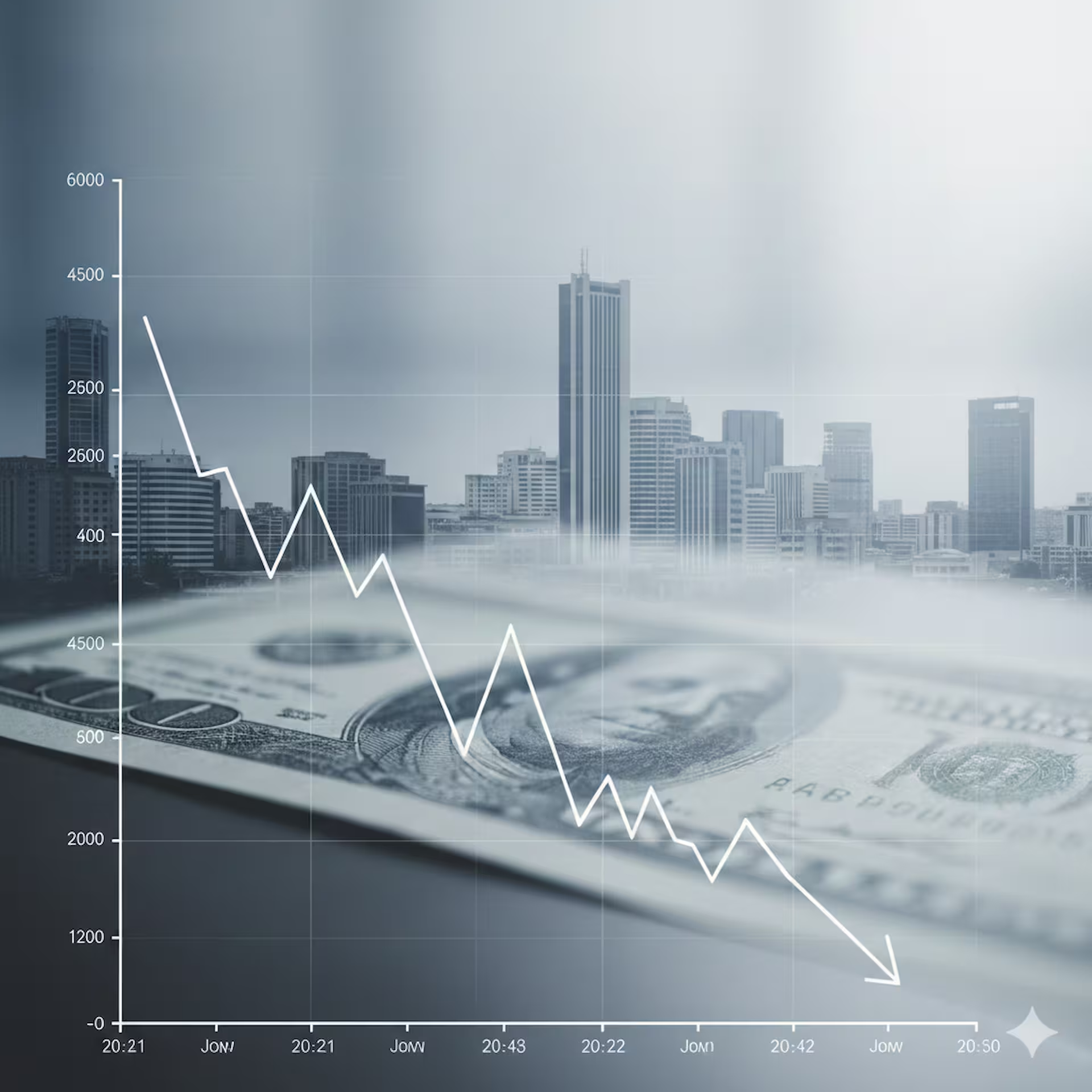
Initial Details of the Dollar Drop
The dollar closed the session of January 13, 2026 at $3,663.24, which represents a decrease of $53.85 compared to the representative market rate of the previous day, fixed at $3,717.09. During the session, a minimum price of $3,626.55 and a maximum of $3.715 were recorded, with a total of 1,742 transactions and a negotiated volume superior to US$1.531 million. This closure marks a level not seen since June 2021.
Causes of the Downward Trend
The downward trend of the dollar is observed since late 2024, attributed to the cuts in interest rates implemented by the Federal Reserve, which have diminished the attractiveness of holding funds in dollars. This has boosted strategies where investors obtain resources in economies with low rates and direct them toward markets with higher rates.

The Placement of Bonds for US$4,950 Million
The government carried out a placement of global bonds for US$4,950 million, qualified as the largest individual issuance of external debt in the country’s history. This operation, with maturities in 2029, 2031 and 2033, attracted purchase orders for near US$23,200 million and a weighted average coupon of 5.93%. In contrast, during all of 2025 US$10.901 million were placed through eight different operations. The announcement of this issuance generated an appreciation of the peso of 2.2%, leading the closure below $3,630 in some moments.

Statements from Analysts
A manager of investment and strategy indicated that the drop should not be interpreted solely as a positive signal, given that the country faces low economic growth, elevated country risk, debt at historical highs and practically stagnant exports. A professor of economics pointed out that the multimillion-dollar debt operation provoked a strong appreciation of the peso. A founder of a firm described the descent as artificial due to the increase in indebtedness. A master’s in economics compared the issuance with a large credit that generates confidence but implies a debt to pay, highlighting that the gross debt increased $371 billion from August 2022 until November 2025. Strategists and market analysts attributed the weakness of the dollar to a global structural trend related to the cycle of rate cuts in the United States and to the rate differential.
The following paragraphs contain speculative analyses based exclusively on the statements and data of the news. These are hypothetical interpretations, not definitive, and should not be interpreted as confirmed facts.
The combination of external rate cuts and a massive debt issuance could generate punctual flows of dollars that pressure the exchange rate downward in the short term, although local fundamentals (low growth and growing debt) could limit the sustainability of this dynamic.
Technical Aspects of the Exchange Rate Dynamic
The bond issuance included initial coupons around 5.375% for 2029, 6.125% for 2031 and 6.5% for 2033. This injection of dollars, together with the attractiveness of rate differentials, explains the observed downward pressure. In scenarios of reduced dollar, imports face lower costs, but demand precise coordination to avoid delays in customs processes.
Do you need reliable logistics for your imports or exports? At Fenix Global Cargo we offer maritime, air, and land transportation, plus cargo insurance and customs operations.
- El dólar cerró la jornada a la baja $53 por debajo de TRM rompiendo su piso de $3.700
- El dólar se desplomó $53 en Colombia y regresó a precios que no se veían desde junio de 2021: esta es la razón
- Dólar en Colombia se movería alrededor de los $3.800 en 2026; remesas y tasas de interés ayudarían
- Emisión de bonos por USD 5.000 millones prueba apetito de inversores previo a elecciones

