

Natural persons are unknowingly engaging in smuggling when importing consolidated cargo
An increasing number of natural persons are losing merchandise after importing under consolidated cargo schemes that appear to be legal but present documentary inconsistencies before DIAN.
In several cases, the situation only becomes evident when customs authorities carry out visits to business premises and proceed with the seizure of the merchandise.
Import with legal support and full traceability from your first shipment

How the scheme operates
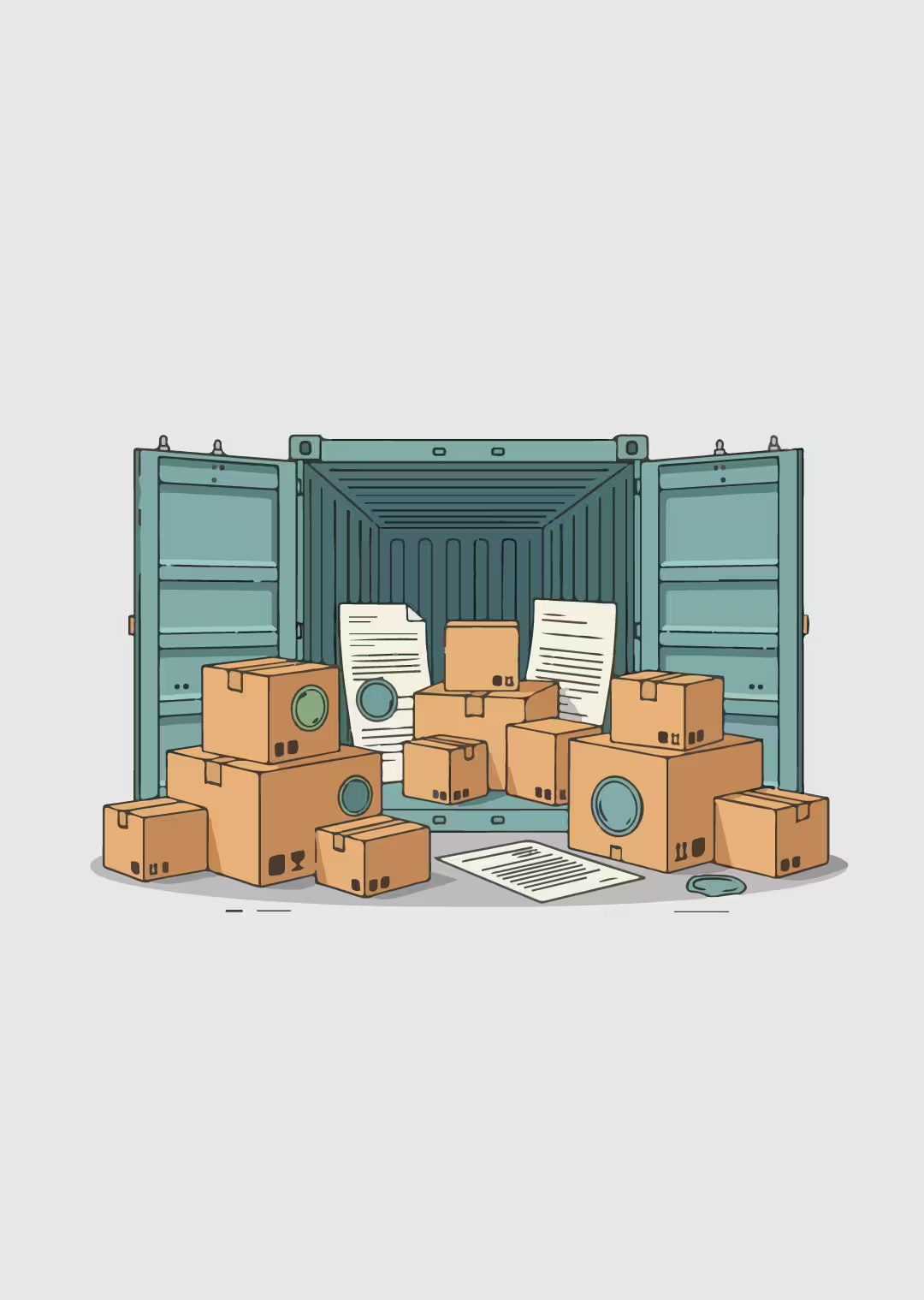
The process begins when a natural person purchases merchandise abroad and sends it to a warehouse designated by a logistics operator. There, the cargo is consolidated together with merchandise from other buyers and dispatched to Colombia.
Consolidation, as a practice, is not illegal. The issue arises in the way the import is structured.
Centralize your import process with an integrated logistics operator
The logistics operator appears as the importer
Under these schemes, the merchandise is not imported under the buyer’s name, but under the logistics operator’s name. Before DIAN, the registered supplier is not the actual seller, but a warehouse or intermediary in the country of origin.
This directly affects value declaration and merchandise traceability.
Invoices that do not cover the merchandise
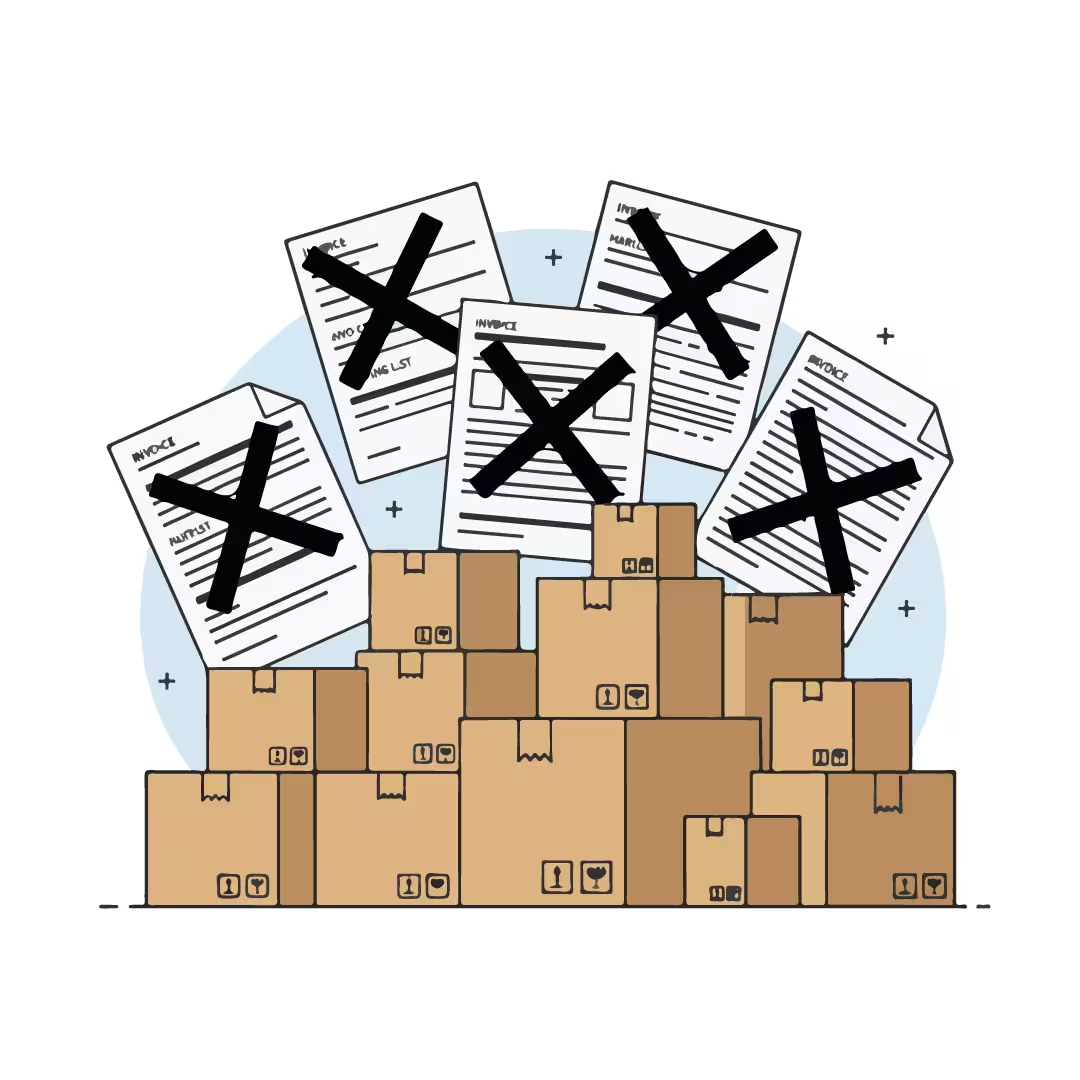
When the cargo is delivered, the buyer receives an invoice that does not itemize the actual merchandise, but instead records concepts such as “logistics services.”
During a verification, DIAN finds merchandise on display without documentary support that matches what was declared.
Import declaring real values and proper documentation

Undervaluation in the declaration
Although the buyer paid a real value for the merchandise, it is declared for a significantly lower amount. Taxes are calculated on that reduced value.
For DIAN, this means that taxes are not being calculated based on the real value of the merchandise.
Foreign exchange regulations and payments abroad
Colombian foreign exchange regulations require consistency between who pays abroad and who appears as the importer. In these cases, payment is made directly to the foreign supplier, while the import is executed by a third party.
This inconsistency increases the legal risk of the operation.
Import with legal support and full traceability
Prior clarification regarding the following section
The following considerations are speculative in nature, do not constitute confirmed facts, and should not be interpreted as definitive conclusions.

Why this scheme continues to occur
The apparent ease of the process and the absence of initial issues lead many buyers to trust structures they do not fully review.
The problem only becomes evident when the merchandise is already in the country and is subject to an inspection.
Importing with documentary support
A proper import must have clear invoicing, real declared values, and consistency between payments, documents, and merchandise.
Fenix Global Cargo supports international import operations with a focus on regulatory compliance and documentary traceability.
Do you need reliable logistics for your imports or exports? At Fenix Global Cargo we offer maritime, air, and land transportation, plus cargo insurance and customs operations.

