
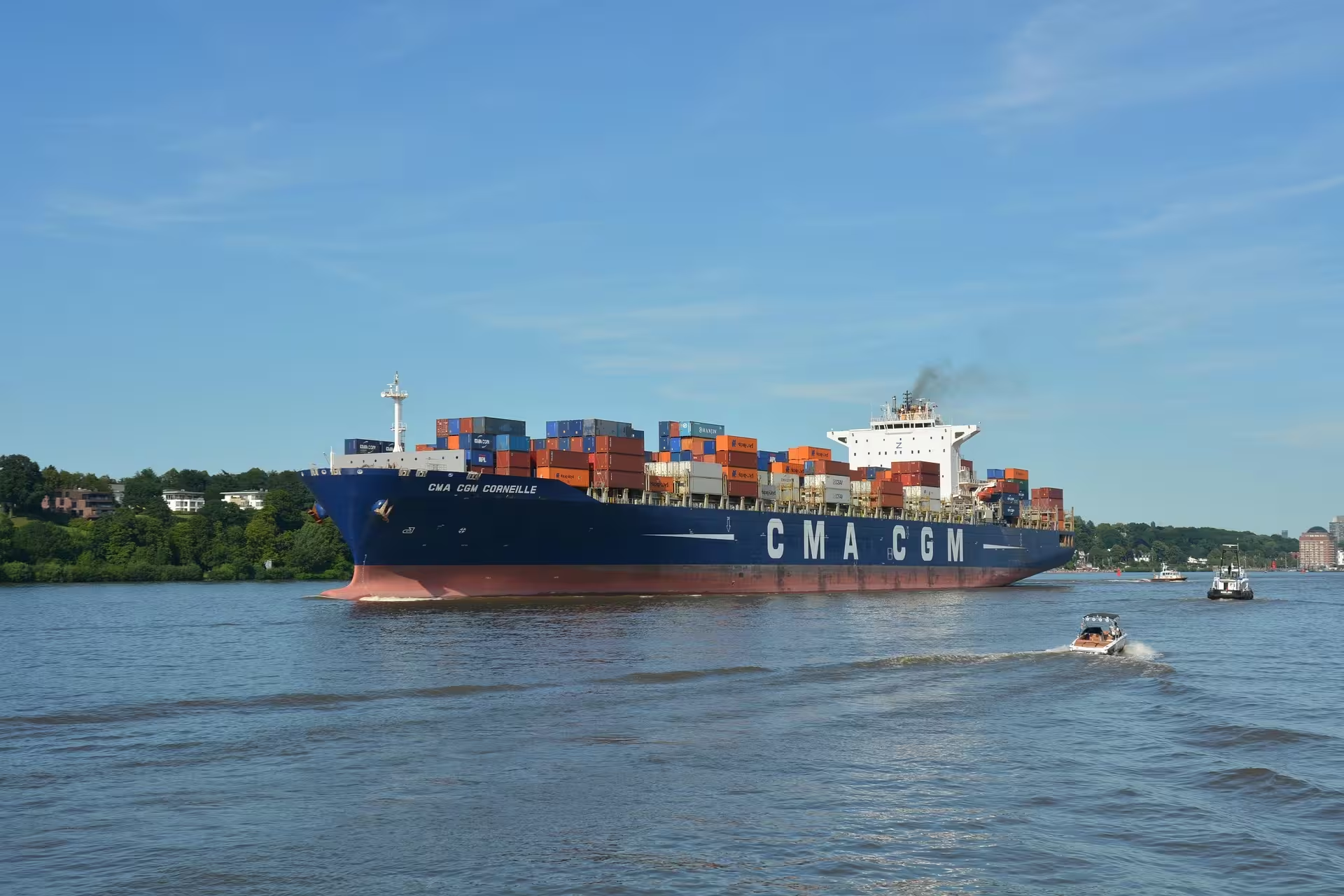
The shipping line CMA CGM announces its arrival at Puerto Antioquia
The arrival of CMA CGM at Puerto Antioquia marks one of the most important logistics milestones for the Urabá region and for Colombian foreign trade. The French shipping line will integrate the new terminal into its Med-Caribbean – NCSA – WCSA service, connecting Europe, the Caribbean, North America, and South America with a direct call in the Gulf of Urabá.
The first operation will take place in December, with the vessel CMA CGM Imagination (6,874 TEUs). Afterwards, the service will continue regularly with a fleet of nine New Panamax container ships, ranging between 6,800 and 7,377 TEUs.
This announcement positions Puerto Antioquia as the first port in Urabá to receive a global long-distance shipping line.
Characteristics of Puerto Antioquia that attract CMA CGM
The new terminal offers conditions that make it a strategic point for international routes. Some of its most relevant features are:
- 570-meter quay designed for large vessels.
- Draft of over 16 meters, suitable for New Panamax ships.
- Three STS cranes in the first phase of operation.
- Projected capacity of 600,000 TEUs per year.
- Total investment close to US$800 million.
These specifications completely modernize the logistics of Urabá, which until now depended on offshore operations with smaller vessels and the use of barges.
Logistical impact of CMA CGM’s arrival at Puerto Antioquia
The inclusion of the port in this international service will transform the connectivity of several productive regions of the country. For sectors such as agribusiness, manufacturing, and refrigerated cargo, the benefits are clear: higher frequency, more direct routes, and potential cost reductions.
Regions that could benefit
- Antioquia
- Eje Cafetero (Coffee Axis)
- Chocó
- Central-western Colombia
By offering a nearby and modern alternative, Puerto Antioquia reduces reliance on terminals such as Cartagena or Buenaventura, optimizing transit times and increasing logistics competitiveness.
A strategic move within the maritime sector
CMA CGM’s decision also sends a message to the market: Urabá is now a real option for international routes. In the port industry, it is common that when a top-tier shipping line takes the lead, others evaluate following the same path. This may trigger accelerated growth for the terminal in the coming years.
Challenges to consolidate Puerto Antioquia’s success
The potential is enormous, but success will depend on strategic factors:
- Efficient operation of inland corridors to move cargo to and from the country’s interior.
- Operational productivity of the terminal: cranes, container yards, reefer services, and vessel turnaround times.
- Confidence from exporters and importers to shift part of their operations.
Overcoming these challenges would position the port as a new national logistics hub.
Conclusion: a structural change for logistics in Colombia
The incorporation of Puerto Antioquia into CMA CGM’s Med-Caribbean service not only expands the country’s maritime offering—it redefines Urabá’s logistics structure and creates a new gateway for Colombian foreign trade.
With modern infrastructure, greater connectivity, and a global carrier supporting its operations, the terminal is ready to become one of the leading ports in the coming years.

