
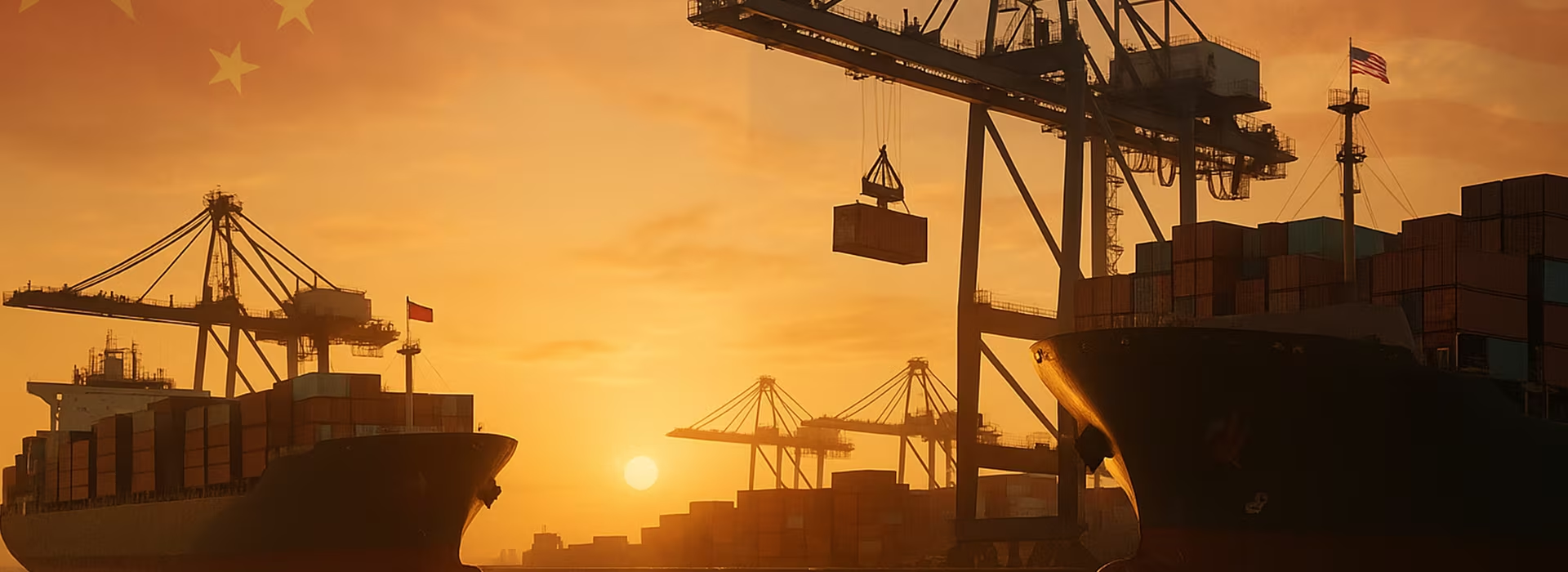
International maritime trade enters a new phase of tension following the reciprocal imposition of port tariffs between the United States and China. The measures, activated on October 14, mark a turning point in the logistical rivalry between both powers, with operational, financial, and geopolitical implications that could extend to countries like Colombia, which is highly dependent on ocean transport.
United States activates tariffs on vessels linked to China
The United States has activated a new port tariff regime targeting vessels owned, operated, or built by Chinese companies, as part of an offensive to limit Beijing’s influence in the global maritime industry. The regulation requires shipowners to certify advance payment of the tariffs through the official Pay.gov portal before receiving authorization to enter or unload at U.S. ports.
The tariffs are divided into two annexes
- US$50 per net ton for vessels operated or owned by Chinese entities, with annual increases of US$30 through 2028.
- For vessels built in China, the higher of two options will apply:
- US$18 per net ton, or
- US$120 per unloaded container.
The system will always apply the more expensive option.
The measure was justified by the Office of the United States Trade Representative (USTR), citing China’s “structural dominance” in shipbuilding, which accounts for nearly 25% of the global fleet. In contrast, the U.S. built fewer than ten merchant vessels in 2024.
According to BIMCO, up to 35% of bulk carriers, tankers, and container ships could be affected, representing 44% of the combined capacity of those fleets. However, a limited impact on freight rates is expected, as major shipping companies are reorganizing their fleets and charter contracts to avoid the costs. Cosco Shipping and OOCL are among the most exposed, with estimated cumulative tariffs of up to US$3.24 billion by 2026, although several companies have stated they will not pass these costs on to customers.
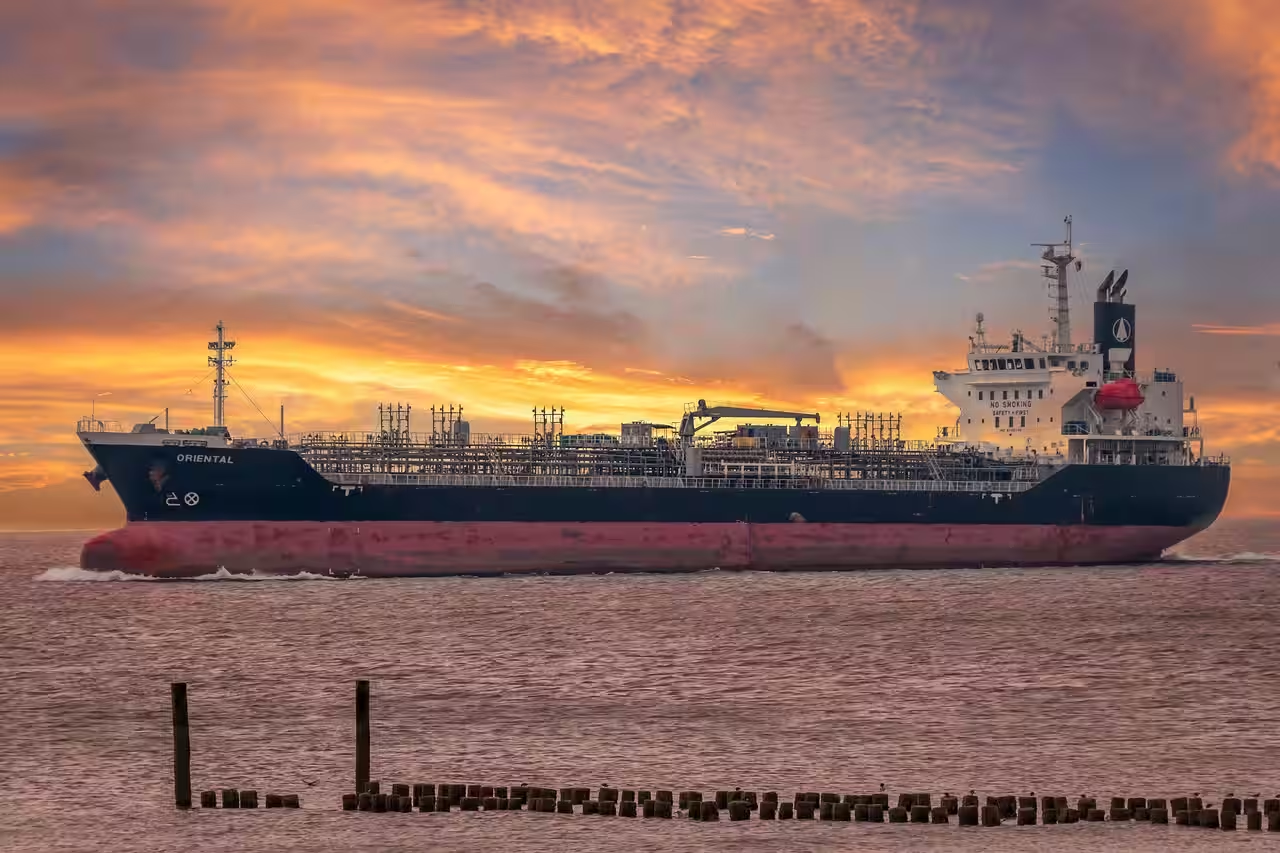
The regulation has raised operational concerns due to the lack of clear definitions regarding vessel ownership and the documentation to be used by U.S. Customs and Border Protection (CBP). Additionally, the U.S. payment system does not accept foreign bank transfers, complicating compliance for international shipowners.
China responds with mirror tariffs and corporate sanctions
In response, China’s Ministry of Transport activated equivalent tariffs for vessels with 25% or more U.S. ownership. This broadens the scope to international fleets with complex ownership structures. Additionally, U.S. subsidiaries of South Korean shipbuilder Hanwha Ocean were sanctioned for allegedly cooperating with U.S. government investigations.
The sanctions triggered a 6.2% drop in Hanwha’s stock, while Chinese shipyard shares rose, anticipating potential state support for the sector.
This exchange of sanctions adds to a global scenario already strained by conflicts in the Red Sea and the reconfiguration of maritime routes. The dispute reflects the growing strategic standoff between both powers over control of oceanic logistics and naval industrial supremacy.
Colombia: strategic routes and diplomatic pressure
Although not directly involved in the conflict, Colombia may face logistical, commercial, and diplomatic impacts from this escalation. Its geographic position and reliance on maritime trade make it vulnerable to secondary effects:
- Buenaventura, Colombia’s main Pacific port, is linked to the new maritime route with China via Shanghai and Chancay (Peru). If U.S. restrictions intensify, port calls in Colombia could be affected, especially if sanctioned vessels or Cosco-chartered ships are involved.
- The Colombian-American Chamber of Commerce warned that diplomatic confrontation with the U.S. could have direct economic consequences. While new routes with China are seen as commercial progress, they may also strain relations with Washington.
- Colombian exporters are already under pressure: the 10% tariff imposed by the U.S. led to a 13.7% drop in exports in August. If maritime restrictions are added, logistics costs could rise further.
Shipping lines like Seaboard Marine and King Ocean, which operate in Colombia and rely on Chinese-built vessels, may face operational restrictions or increased costs if U.S. port controls intensify.
Global operational impact: adjustments, uncertainty, and rising costs
Shipping companies have begun to reorganize their fleets and review charter contracts to avoid penalties. Cosco Shipping and its subsidiary OOCL are among the most exposed, with projected cumulative tariffs of up to US$3.24 billion by 2026
Projected costs are significant:
Vessel Type | Estimated Surcharge |
Estimated Surcharge | Up to US$6.2 million |
Capesize Bulk Carrier | Up to US$3.8 million |
Mid-size Container Ship | Up to US$180 per TEU |
Several operators have suspended bookings and are reassessing operational risks. Maersk confirmed it is evaluating the potential impact on its services calling at Chinese ports.
Beyond tariffs: logistical control and strategic rivalry:
This exchange of measures represents a dispute over control of global supply chains, access to strategic ports, and technological sovereignty in the maritime sector. In a context where over 80% of global trade depends on ocean transport, the repercussions could be felt across the global economy.
Sources
- EE.UU. escala ofensiva y esta semana impondrá gravámenes a buques vinculados con China – MundoMarítimo
- China impone gravámenes portuarios a buques con capital estadounidense y sanciona al astillero surcoreano Hanwha Ocean – MundoMarítimo
- Colombia abrió ruta marítima comercial con China – El Nacional
- Exportaciones de Colombia a Estados Unidos cayeron 13,7 % en agosto – El Tiempo
- Impacto de gravámenes de EE.UU. en navieras – HT Line
- Colombia abre ruta marítima comercial con China – DW
- Colombia abre ruta marítima comercial con China en medio de tensiones – CRHoy
- Impacto del gravamen de EE.UU. en buques ligados a China – Logística360

